You do not notice household paperwork when life is running smoothly. You notice it when a warranty is suddenly missing, a utility bill is buried under school forms, or you need a serial number five minutes before a service call. A good guide to storing household paperwork is really about reducing that kind of friction.
Most homes do not have a paperwork problem because there is too much paper. They have a system problem. Documents land in piles, temporary papers mix with records worth keeping, and nobody is fully sure what belongs in a drawer, a file box, or the recycling bin. The fix is not a complicated filing method. It is a simple structure you can keep up with on a busy week.
What a good household paperwork system needs to do
A useful paperwork system should help you do three things quickly: know what to keep, know where it goes, and find it again without a long search. If any one of those breaks down, paper starts spreading across counters, junk drawers, backpacks, and kitchen tables.
That is why the best guide to storing household paperwork starts with access, not perfection. A beautifully labeled archive does not help much if daily mail still lands in random places. On the other hand, a plain filing setup that is easy to maintain can keep your household much calmer.
It also helps to separate active paperwork from reference paperwork. Active paperwork is anything you need to act on soon, such as a bill that still needs attention, a school form to sign, or a repair invoice you may need this month. Reference paperwork is what you keep for later, such as appliance warranties, owner manuals, home improvement receipts, and provider account information.
Start by sorting papers by purpose, not by room
Many people organize paper based on where they found it. Kitchen papers stay in the kitchen. Mail goes near the entryway. Appliance documents get tucked into a random cabinet. That feels natural in the moment, but it creates a scattered system over time.
A better approach is to sort by purpose. Bills and statements belong in one category. Home records belong in another. Manuals and warranties belong together. Medical, school, and personal records can each have their own section if they apply to your household. This keeps related information in one place even when it arrives from different sources.
For most households, a small set of categories is enough. If you create too many folders too early, filing starts to feel like a chore. Broad categories are easier to maintain, and you can always split them later if one gets too full.
Your guide to storing household paperwork in three layers
The easiest way to organize paper is to think in layers. Not every document deserves the same storage method.
The first layer is incoming paperwork. This is your landing zone for mail, receipts, school notices, and anything else that just entered the house. Keep it small and visible. A single tray, folder, or inbox works better than several drop spots. The goal is to collect new paper in one place before it spreads.
The second layer is action paperwork. These are papers that still need a decision, payment, signature, call, or follow-up. This category should stay easy to reach because it is temporary by nature. If you hide it in deep storage, things get missed.
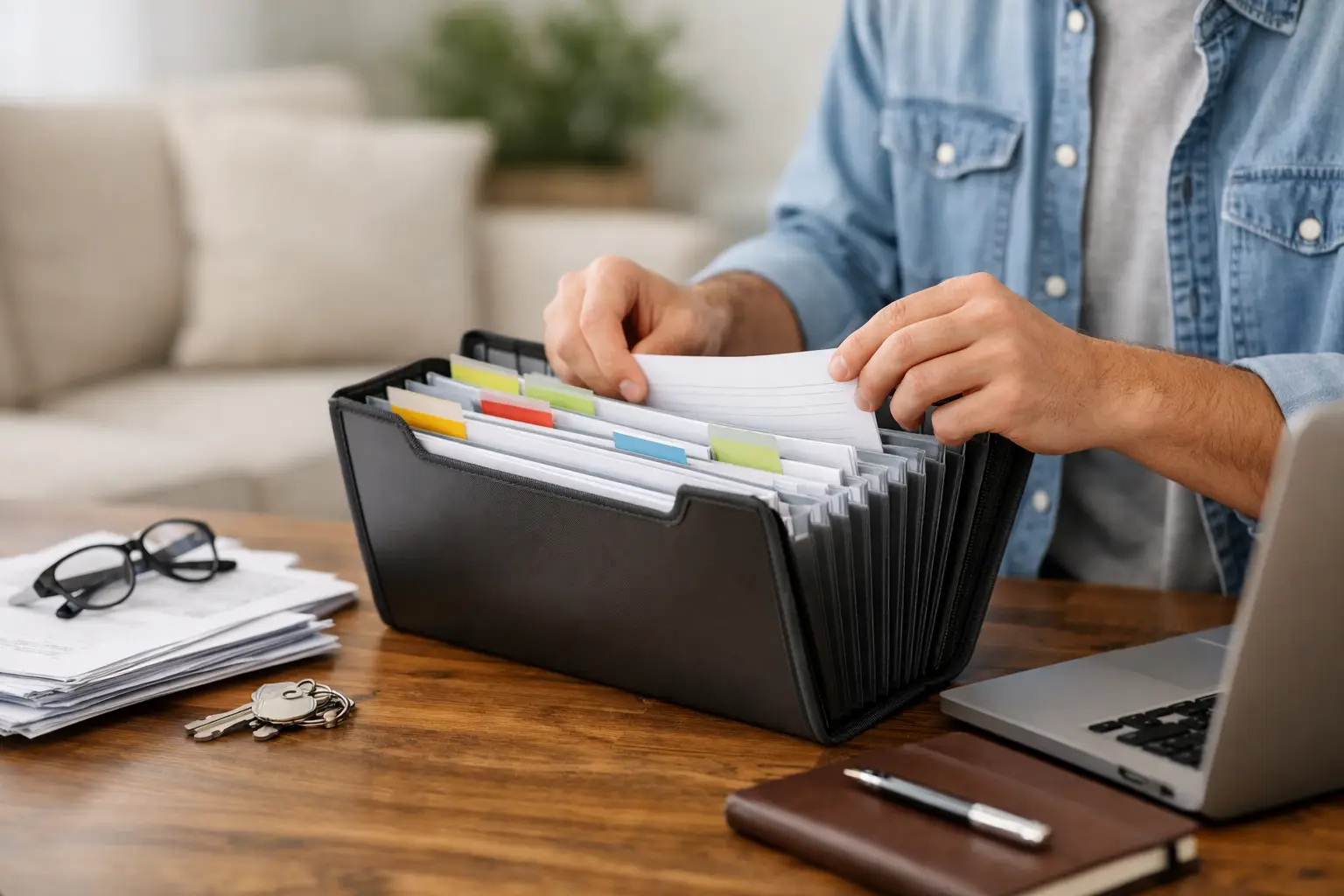
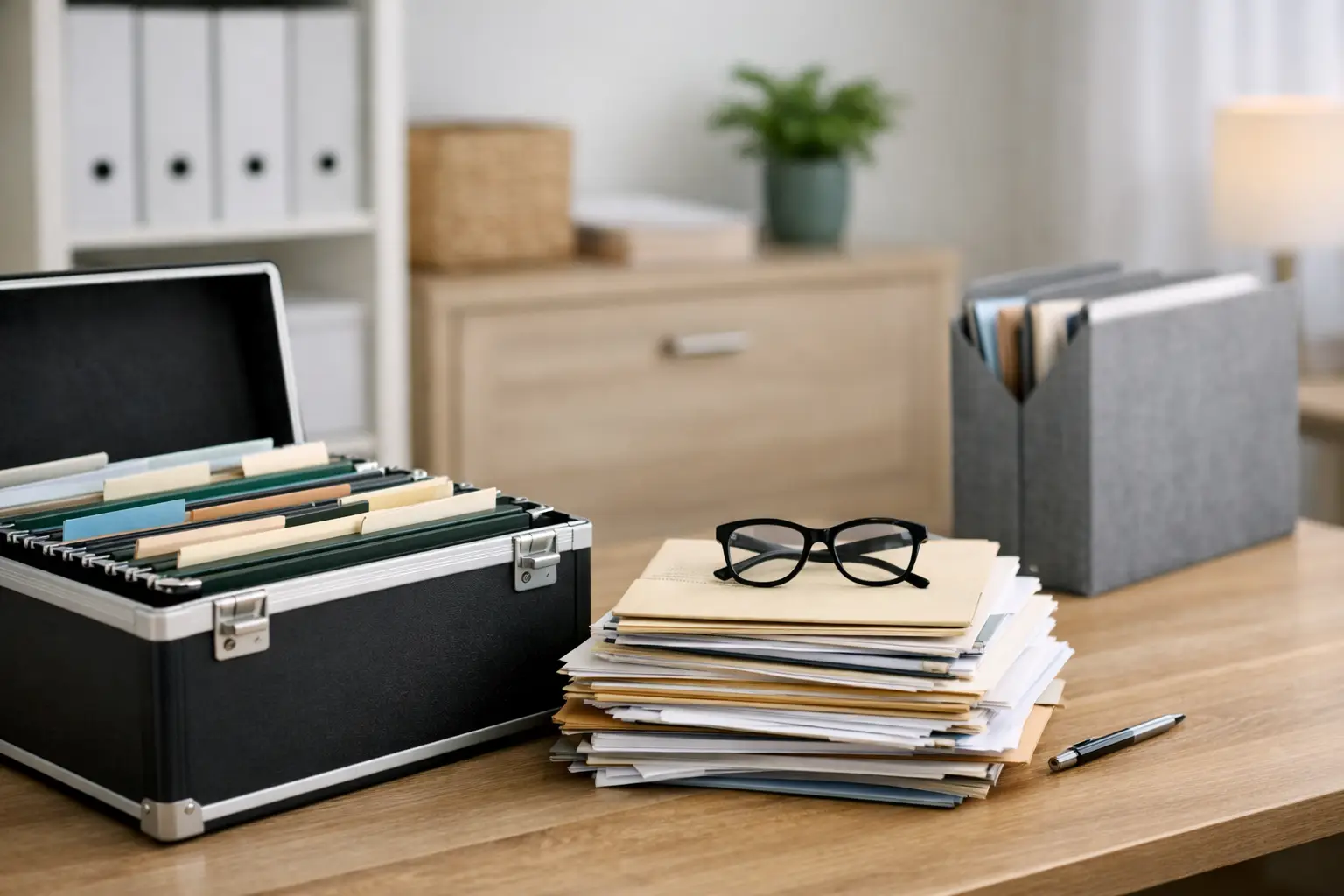
The third layer is stored paperwork. This is the material you are keeping for reference. It should live in a consistent filing location, whether that is a small file box, a drawer, or a cabinet. This is where household records become manageable instead of stressful.
That three-layer setup works because it reflects real life. Paper usually arrives, waits for some action, then either gets stored or thrown away. When your system matches that flow, it is much easier to keep using.
What to keep on paper and what to store digitally
Not every paper document needs to stay in paper form. In fact, most households do better with a mix of physical and digital storage.
Paper copies make sense for original documents, signed records you prefer to keep intact, and anything you want available without relying on your phone or email search. Digital copies work well for warranties, appliance information, receipts, home service records, and manuals, especially if you want fast access while shopping, moving, or scheduling repairs.
The trade-off is simple. Paper feels tangible and familiar, but it takes space and is easier to misplace. Digital copies save space and are easier to search, but only if you name and store them consistently. A half-digital system with no structure can be just as messy as a paper pile.
For household records tied to your home, appliances, and upkeep, this is where ClearDue Abode fits naturally. It gives iPhone users a straightforward place to keep warranty details, appliance records, provider information, and maintenance-related documentation organized in one mobile-first system instead of across drawers, photos, and email folders.
The paperwork categories most homes actually need
You do not need dozens of tabs to stay organized. Most households can manage paperwork with a short list of practical categories.
Home documents usually include lease or purchase records, renovation receipts, utility account details, and provider information. Appliance and equipment records include manuals, model numbers, serial numbers, warranties, and purchase receipts. Financial household papers may include bills, payment confirmations, and subscription-related notices if you still receive them by mail. Then there is a general personal admin section for forms, school notices, and other records that do not fit elsewhere.
If you own a home, your home and appliance categories often deserve the most structure because those documents tend to matter at inconvenient times. You rarely need a washing machine manual until you really need it. The same goes for warranty terms or proof of purchase.
How to set up storage without turning it into a project
A lot of organizing systems fail because they ask for too much upfront. The better move is to build a simple framework first and refine it only when needed.
Choose one physical home for stored paperwork. That could be a portable file box, a small filing drawer, or a cabinet with labeled folders. Then choose one spot for incoming paperwork and one spot for action items. If your household can remember those three locations, the system is already strong enough to work.
Labels should be plain. Think utilities, home, appliances, warranties, receipts, school, and medical if needed. Avoid labels so specific that you hesitate every time you file something. If it takes too much thought, paper starts piling up again.
It also helps to decide on a review rhythm. Weekly is ideal for incoming papers. Monthly works well for checking stored records, scanning anything worth keeping digitally, and clearing out papers that no longer serve a purpose. This does not need to become a major admin session. Fifteen minutes is often enough.
Common mistakes in storing household paperwork
The most common mistake is treating all paper as equally important. When everything gets saved, nothing is easy to find. Some papers are temporary and should leave your home quickly. Others are useful only for a short window. A smaller archive is usually a better archive.
Another mistake is storing documents where they are used instead of where they belong. A warranty in the laundry room or a utility statement on the fridge may seem convenient in the moment, but those one-off choices create clutter and make retrieval harder later.
The third mistake is relying on memory. Many people assume they will remember where they put a manual, receipt, or service note. That works right up until a repair appointment, a move, or a warranty issue puts pressure on your system.
Make retrieval the real goal
The true test of any guide to storing household paperwork is not how tidy your files look. It is whether you can find what you need in under two minutes.
That is why organizing by household function works so well. When you need the water heater details, you know to look under home equipment or appliances. When you need proof of purchase, you know it is stored with that item or in your receipt records. When maintenance history matters, it is attached to the home record instead of buried in old email.
A good system should remove guesswork. If you are still asking yourself where would I have put that, the setup needs to be simpler.
Paperwork will never stop coming into a household. But it does not have to keep stealing your attention. When your papers have a clear path from arrival to storage, everyday admin feels lighter, and the next time you need an important record, it is already where it should be.