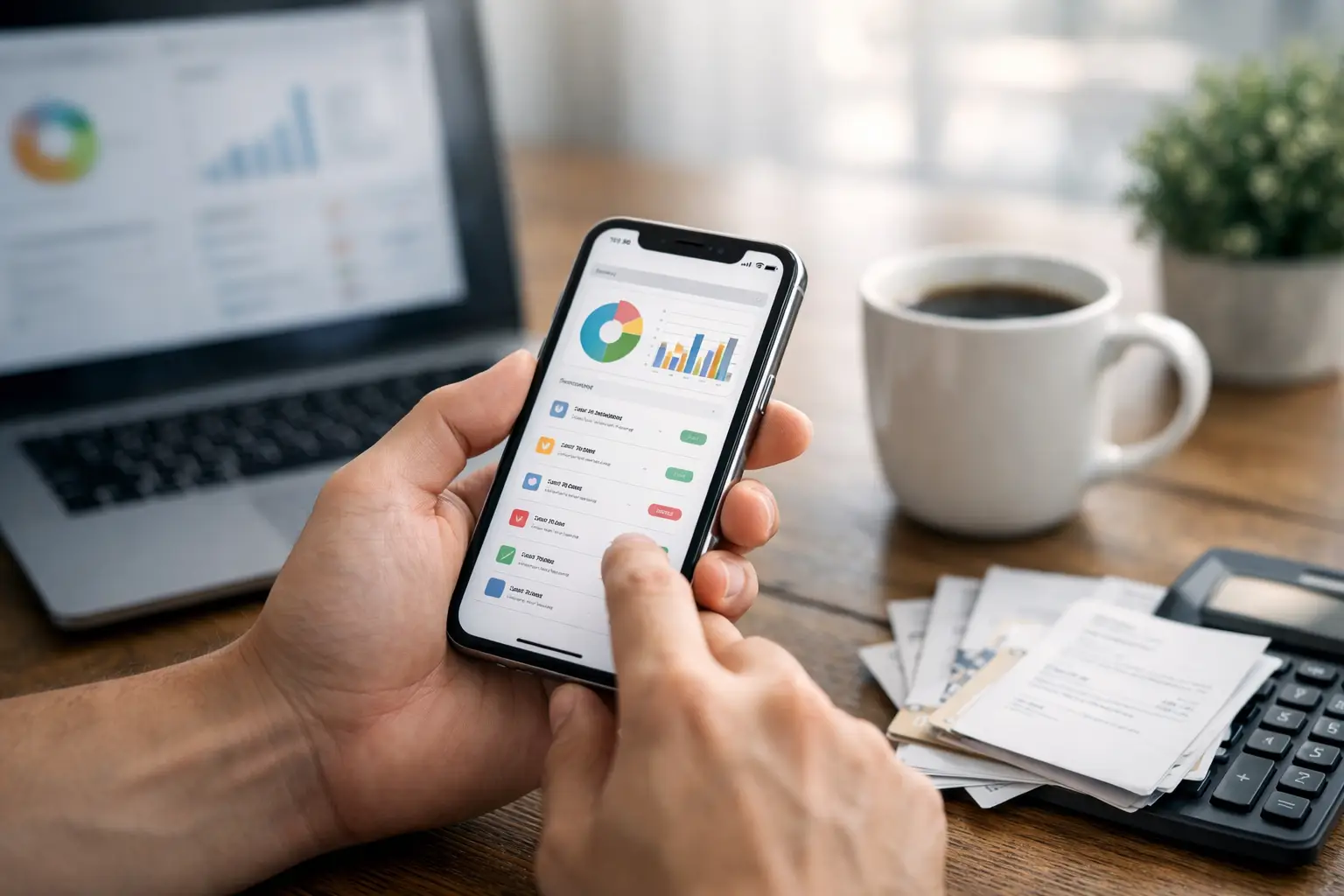
That small charge you forgot about usually shows up at the worst time. Maybe it renews after a free trial you meant to cancel. Maybe it hits once a year, long after you stopped thinking about it. A subscription tracker gives those recurring charges a place to live, so they are not hiding in bank statements, email receipts, or your memory.
For most people, subscription creep is not about one giant mistake. It is a pileup of little things. A streaming service here, a cloud storage plan there, an annual app renewal, a monthly delivery membership, a forgotten premium trial. None of them seem urgent on their own. Together, they can make monthly expenses feel harder to predict than they should.
That is why the best subscription tracking system is not just a list. It is a simple way to see what is active, when each charge is due, and which renewals need your attention before they happen. If you are trying to feel more in control of recurring payments without building a spreadsheet or checking three different places, that kind of visibility matters.
What a subscription tracker actually helps you do
A good subscription tracker helps with more than canceling services you no longer want. It gives you a cleaner view of your recurring obligations, especially the ones that are easy to miss because they are spread out over time.
Monthly subscriptions are only part of the picture. Annual renewals are often the bigger problem because they disappear for months and then return with no warning. App renewals, software plans, family memberships, media services, and delivery programs all have different billing cycles. Without one place to track them, it becomes easy to lose the thread.
This is where reminders make the difference. Seeing a charge after it posts is useful, but seeing it before it renews is what helps you make a choice. Keep it, change it, or cancel it. That is a practical difference, not a small one.
Why subscriptions get overlooked so easily
Recurring charges are designed to fade into the background. Once they are set up, they usually keep running quietly. That convenience is part of the appeal, but it also creates blind spots.
Some subscriptions start during a busy week and then become part of the routine. Others are tied to a sale, a free trial, or a one-time need that passed months ago. A few are shared with family, which makes ownership fuzzy. When the charge amount is modest, it often does not feel worth dealing with right away. So it stays.
There is also a timing problem. People do not think about subscriptions all at once. They think about them when a charge appears, when a credit card statement looks higher than expected, or when they remember an account they meant to review. By then, the useful moment may have already passed.
A subscription tracker works because it moves the task forward. Instead of reacting to charges after they happen, you can organize renewals in advance and deal with them on your own schedule.
What to look for in a subscription tracker
The right setup should feel easier than doing nothing. If tracking subscriptions takes too much effort, most people will stop using it after the first week.
Start with visibility. You should be able to see each subscription, its cost, how often it renews, and the next due date. That sounds basic, but it solves a real problem. A lot of recurring charges feel expensive only because they are hard to see together.
Then look at reminders. This is one of the most useful parts of any subscription tracker. A reminder before a renewal date gives you time to decide whether the service still fits your life. You are not scrambling after the charge appears. You are reviewing it before it becomes automatic again.
It also helps when the tracker is built for real-life use, not financial overkill. Most people do not need a complex finance platform just to stay on top of recurring charges. They need something clear, fast, and easy to update when plans change.
For iPhone users who want that kind of straightforward subscription organization, ClearDue Tracker fits naturally. It is designed around recurring bills, due dates, and subscription reminders, which makes it useful for people who want a simple mobile-first way to stay ahead of renewals without turning the task into a project.
Subscription tracker habits that actually stick
The most effective system is usually the one you will maintain in two minutes, not the one that looks perfect on day one.
A practical approach starts with gathering the subscriptions you already know about. Think streaming, music, storage, delivery memberships, apps, software, and any annual renewals that tend to slip off your radar. You do not need to build the perfect list in one sitting. Start with the obvious ones and improve it over time.
Then add the details that matter most: amount, billing frequency, and renewal date. If canceling requires advance notice, that is worth noting too. The point is not to create a record for record’s sake. It is to make future decisions easier.
After that, reminders do the heavy lifting. A reminder a few days or a couple of weeks before renewal can be enough, depending on the type of subscription. Short free trials may need a faster check-in. Annual plans may deserve more notice because they are easier to forget and often cost more when they hit.
A simple monthly review also helps. Not a full audit. Just a quick look at what is due soon and whether anything has changed. Maybe a shared plan is no longer needed. Maybe a trial became permanent by accident. Maybe a yearly service is still useful, but you want to be ready for the charge. Small check-ins prevent messy catch-up later.
The trade-off between simple and detailed tracking
There is no perfect level of detail for everyone. Some people want to track every recurring charge down to the exact renewal terms. Others just want a reminder before something expensive renews.
Both approaches can work. It depends on your habits and how much friction you are willing to tolerate. If your system is too bare, you may miss important context. If it is too detailed, you may stop using it altogether.
That is why a subscription tracker should match your real behavior, not your ideal version of yourself. If you prefer quick updates on your phone, a mobile-first setup makes more sense than a spreadsheet you only open twice a year. If you mainly forget annual renewals, focus there first instead of trying to catalog everything at once.
The goal is not perfect financial administration. The goal is fewer surprises and better timing.
When a subscription tracker becomes especially useful
Some seasons make recurring charges harder to manage. A move, a new baby, a job change, back-to-school months, the holiday season, or any period with lots of signups and expenses can make subscriptions blend into the background. During those stretches, memory is not a system.
A subscription tracker is also useful for households where responsibilities are shared. One person may sign up for a service, another may pay the card, and neither is fully watching the renewal cycle. A central place to track what is active can cut down on confusion.
It is just as helpful for people who are already organized but want less mental clutter. You may know your bills are generally under control, but still dislike the feeling that renewals are scattered across inboxes, notes apps, and account pages. Tracking them in one place reduces that low-grade uncertainty.
A calmer way to manage recurring charges
Subscriptions are easy to start and easy to forget, which is exactly why they deserve a simple system. A subscription tracker does not need to be complicated to be useful. It just needs to help you see what is coming, remember what matters, and make decisions before charges happen automatically.
When recurring payments are organized in one place, they stop feeling like loose ends. They become part of a clear routine, and that makes everyday money management feel lighter.