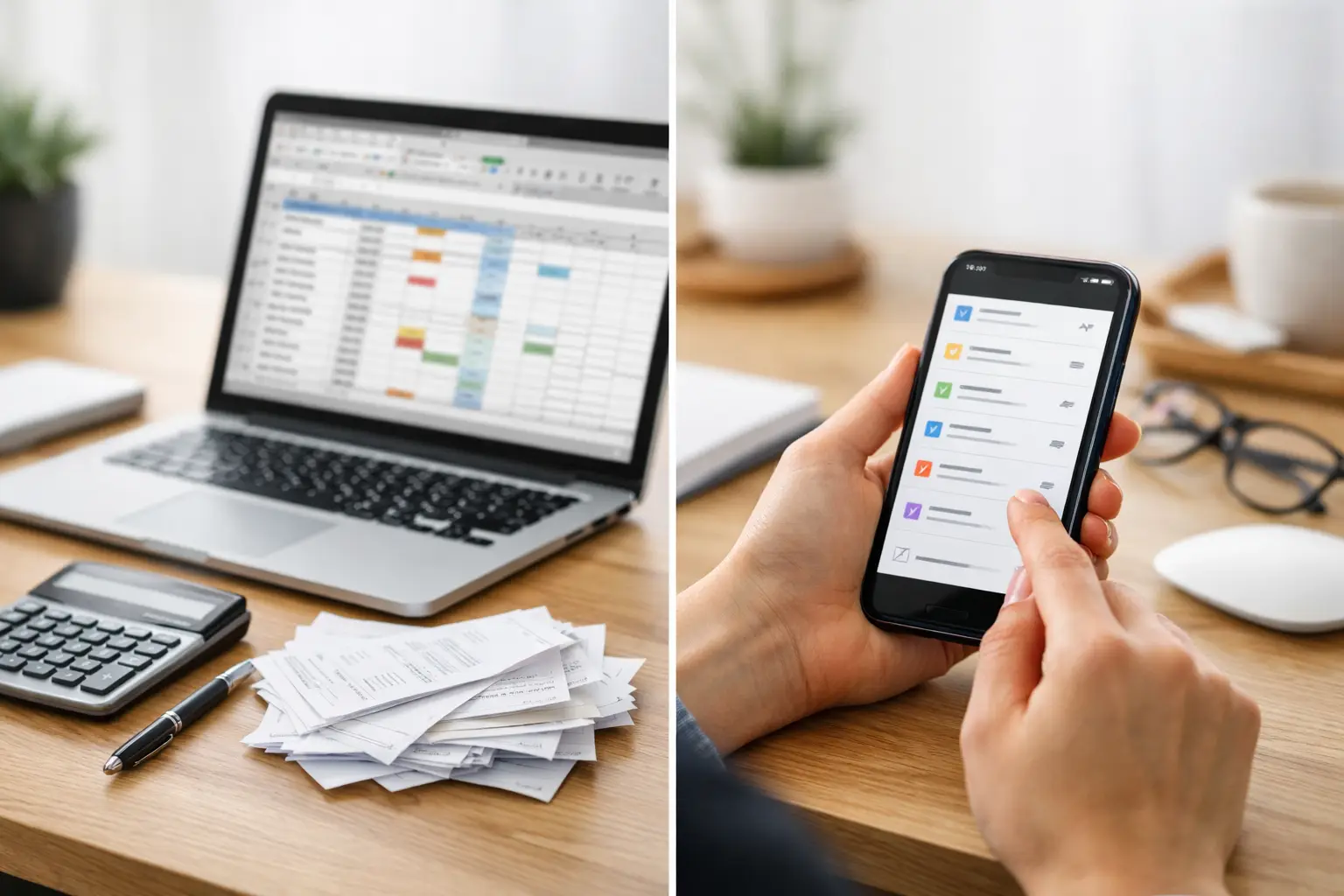
A bill spreadsheet is a custom table you maintain; a bill tracker is a tool built around recurring due dates, reminders, and payment status. Choose a spreadsheet for flexible formulas and columns. Choose a tracker when keeping dates visible and receiving reminders matters more than designing your own system.
A spreadsheet and a bill tracker can help you stay organized, but they do it in very different ways. A spreadsheet gives you a blank system to build and maintain yourself. A bill tracker is built around recurring due dates, reminders, and visibility into what needs attention next. The better choice depends less on what looks more powerful and more on what you will actually keep up with month after month.
What is the difference between a spreadsheet and a bill tracker?
A spreadsheet is flexible. You can create columns for bill name, amount, due date, payment method, notes, confirmation number, and anything else you want to include. If you like setting up your own categories and tweaking your system, that flexibility can feel useful.
A bill tracker is more specific by design. Instead of asking you to build the structure, it gives you a way to track bills, subscriptions, recurring charges, and due dates in a format made for that exact job. The focus is not on endless customization. It is on making sure you know what is due, when it is due, and what has already been handled.
The difference between a custom spreadsheet and a purpose-built tracker affects the maintenance routine. A spreadsheet can be tailored to your habits, but it also depends on your consistency. A bill tracker tends to reduce setup choices in exchange for less mental work later.
Where spreadsheets still make sense
For some people, a spreadsheet works perfectly well. If you have a small number of monthly bills, a steady routine, and no problem opening a file to update it regularly, a spreadsheet can do the job. It can also be useful if you want a broad household overview that includes more than just due dates.
Spreadsheets are especially appealing to people who like full control over layout. You may already have a template you trust. You may color-code everything, create your own formulas, and feel comfortable adjusting it whenever life changes.
There is also a familiarity factor. Many people already know how to use spreadsheets, so there is no learning curve around a new system. That matters if your current method is mostly working and you only need a simple place to list what is due each month.
But that strength comes with a catch. A spreadsheet only helps if it is current. If you forget to update a changed due date, skip a recurring annual renewal, or stop checking the file during a busy month, the system becomes less reliable very quickly.
Why spreadsheets often break down in real life
The problem is usually not the spreadsheet itself. The problem is maintenance.
A bill list is not static. Subscription prices change. Annual renewals slip out of mind because they happen so rarely. Payment dates move.
A trial turns into a paid plan. A new utility account gets added after a move. Even a well-built spreadsheet needs regular attention to stay accurate.
That is where many people fall off. A spreadsheet can track information, but it does not naturally pull your attention back to what matters today. It waits for you to remember to open it, review it, and manually mark progress.
For busy households, that can become one more administrative task floating in the background. It is not difficult in theory. It is just easy to postpone.
There is also the issue of visibility. A spreadsheet may hold all the right details, but if you have to scan rows and tabs to figure out what is due this week, it can still feel harder than it should. When your goal is peace of mind, a tool that requires regular decoding can add friction.
What a bill tracker does better
A bill tracker is built around ongoing obligations rather than raw data entry. That sounds like a small distinction, but it changes the daily experience.
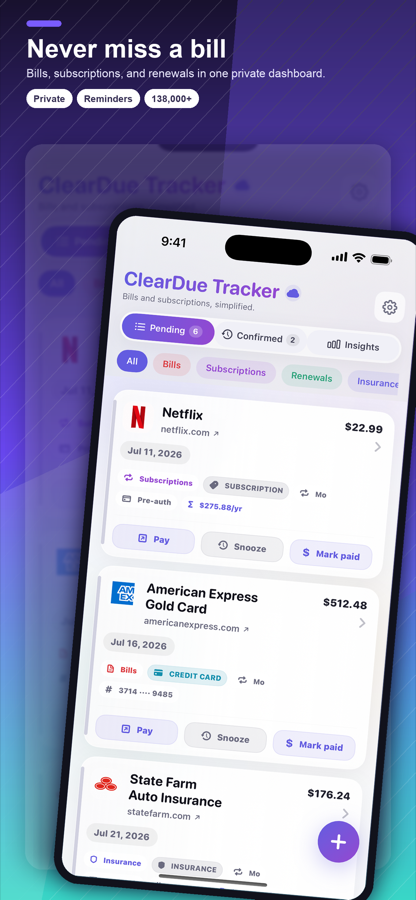
Instead of creating your own structure from scratch, you are working in a system designed for recurring responsibilities. You can see upcoming due dates, keep track of subscriptions, and get reminders before something slips through the cracks. The value is not just storing the information. It is making the information easier to act on.
This is especially helpful for bills that are easy to forget because they do not demand constant attention. Streaming renewals, annual memberships, quarterly services, and autopay accounts can all fade into the background until there is a surprise charge or an overdue notice. A bill tracker keeps those obligations visible without asking you to rebuild the wheel.
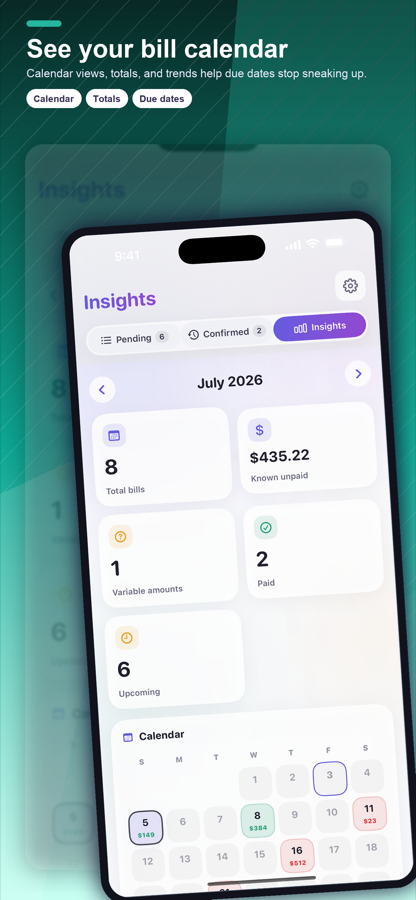
For iPhone users who want a simpler way to stay ahead of recurring payments and renewals, ClearDue Bill Tracker fits this need naturally. It is built for bill tracking, subscription reminders, payment visibility, and recurring due dates, which makes it a better match for this use case than a general spreadsheet for many households.
Spreadsheet vs bill tracker for different types of users
If you genuinely enjoy setting up systems, a spreadsheet may still suit you. Some people like having every detail in one place and do not mind regular manual upkeep. If reviewing and updating a sheet feels easy, not draining, there is no reason to abandon it just because a dedicated app exists.
But if your current system depends on memory, scattered notes, or a spreadsheet you only remember after a due date passes, that is a sign the format may be working against you. In that case, a bill tracker is often the more practical choice.
This is especially true for people who manage more than just a couple of monthly charges. Once you add subscriptions, annual renewals, household services, and shared expenses, the volume of recurring obligations can get hard to hold together in a manual file. A bill tracker reduces that load by making follow-through easier.
Couples and families often benefit from this shift too. A spreadsheet can become one more document that only one person understands. A bill tracker tends to be easier to check at a glance, which matters when household responsibilities are shared or handed off during busy seasons.
The trade-off: flexibility vs follow-through
Most comparisons between a spreadsheet and a bill tracker come down to one trade-off. A spreadsheet offers more freedom. A bill tracker offers more structure.
Freedom sounds better at first, but structure is often what makes a system sustainable. The question is not which tool can theoretically do more. It is which tool makes it easier to stay organized with the least effort over time.
If your system requires too much upkeep, it will eventually get neglected. If it is simple enough to check and trust regularly, you are far more likely to stay ahead of due dates and renewals.
That does not mean spreadsheets are bad. It means they are better for people who want to manage the system itself. Bill trackers are better for people who want the system to help manage them.
How to decide without overthinking it
A simple test is to look at the last three months. Did you consistently check your spreadsheet before bills were due? Did you update changes right away? Did it help you catch renewals and recurring charges before they surprised you?
If the answer is yes, your spreadsheet may be doing exactly what you need. Keep it.
If the answer is no, the issue may not be your discipline. It may be that your tool asks too much from you. When a system relies on manual updates and regular review, small lapses are enough to create late fees, duplicate subscriptions, or that constant feeling that you might be forgetting something.
A bill tracker makes more sense when your main goal is not custom reporting or formula-building. It makes more sense when you want a clear view of what is coming up and a dependable reminder before it matters.
That is why, for most everyday bill management, the spreadsheet vs bill tracker decision usually leans toward the tracker. Not because spreadsheets are incapable, but because recurring obligations are easier to handle in a tool designed around reminders, due dates, and ongoing visibility.
The best system is the one you can trust on an ordinary Tuesday when life is busy and your attention is somewhere else. If your bill management method feels easier to maintain, it is far more likely to keep working.