A bill rarely feels urgent when it first lands in your inbox. Then a few days pass, a card on file expires, a subscription renews quietly, and suddenly you are trying to remember what was due, what already got paid, and what still needs attention. That is exactly where bill tracking helps. If you have ever asked what is bill tracking, the short answer is simple: it is a way to keep all your recurring payments, due dates, and renewal reminders organized so nothing gets missed.
Bill tracking is not the same as budgeting, and it is not about turning your finances into a full-time project. It is much more practical than that. It gives you a clear view of what you owe, when it is due, how often it repeats, and whether you have taken care of it.
What is bill tracking?
Bill tracking is the process of recording and monitoring your bills in one place so you can stay ahead of payment dates and recurring charges. That can include monthly utilities, rent, phone service, insurance premiums, streaming subscriptions, annual renewals, and other repeat obligations that are easy to forget when life gets busy.
At its core, bill tracking answers a few basic questions. What needs to be paid? When is it due? How often does it come back? Has it been paid already? Those questions sound simple, but when your information is spread across emails, paper statements, bank alerts, calendars, and memory, the system starts to break down.
A good bill tracking system brings those details together. Instead of reacting to charges after they happen, you can see upcoming due dates in advance and manage them on purpose.
Why bill tracking matters in everyday life
Most people do not miss bills because they are careless. They miss them because modern household life is scattered. Some bills auto-renew, some arrive by email, some are charged to a card, and others show up once a year just when you have stopped thinking about them.
That creates mental clutter. Even when nothing is technically overdue, you may still carry the low-level stress of trying to remember what is coming next. Bill tracking reduces that pressure by replacing memory with a simple system.
It also helps with visibility. If you are managing a household, sharing responsibilities with a partner, or keeping up with several subscriptions at once, it is helpful to know which charges are active and which dates are approaching. You do not need a complicated finance platform for that. You need a reliable way to see what is due and when.
What bill tracking usually includes
Bill tracking can be as basic or as detailed as you want, but most people benefit from keeping the same core information for each bill. That usually includes the bill name, amount, due date, payment frequency, and whether it is upcoming or already paid.
For some bills, a note matters too. You might want to record that a subscription renews annually, that a utility bill fluctuates, or that a payment method needs updating before the next charge. Small details like that are often what prevent last-minute surprises.
The real value is not in collecting data for its own sake. It is in making recurring obligations easier to follow over time.
What bill tracking is not
It helps to clear up a common misunderstanding. Bill tracking is not the same thing as full budgeting software. A budget focuses on how much money you plan to spend across categories like groceries, transportation, and entertainment. Bill tracking focuses on recurring obligations and their due dates.
There is some overlap, of course. If you know what bills are coming, it is easier to plan around them. But bill tracking is more about organization and reminders than financial analysis.
It is also not the same as relying only on autopay. Automatic payments can be useful, but they do not replace visibility. A bill can still change in amount, fail to process, renew at the wrong time, or continue longer than you expected. Tracking helps you stay aware even if a payment is automated.
Who benefits most from bill tracking
Almost anyone with recurring payments can benefit, but it is especially useful for people whose responsibilities are spread across multiple accounts and services. That includes renters keeping up with utilities, families managing household subscriptions, couples sharing bills, and busy professionals who do not want to rely on memory for every due date.
It is also helpful for people who are not financially disorganized, but simply tired of checking too many places. You might already pay everything on time and still feel like your system is messy. Bill tracking can make that process calmer and easier to maintain.
If you have ever found yourself searching your email for a renewal notice, checking your bank account to confirm whether something cleared, or trying to remember if a yearly subscription is coming up this month or next, you are the kind of person bill tracking is built for.
What is bill tracking helping you avoid?
The obvious answer is late fees, but that is only part of it. Bill tracking also helps reduce duplicate payments, overlooked renewals, expired payment methods, and those small recurring charges that keep going because no one has a clear list of what is active.
Just as important, it helps avoid decision fatigue. When your bill information is scattered, every due date becomes a mini search project. You are not just paying a bill. You are trying to remember where the statement went, when it renews, and whether you already handled it. That repeated effort adds up.
A clear tracking system cuts down on that friction. You spend less time piecing things together and more time simply staying on top of what matters.
How people track bills now, and where those systems fall short
Many households already have a version of bill tracking, even if it is unofficial. It might be a paper planner on the kitchen counter, a spreadsheet, a notes app list, a few calendar reminders, or a mental checklist that mostly works until the month gets hectic.
Those methods are not wrong. In fact, they can work well for a while. The trade-off is that they often depend on constant manual upkeep, and they are easy to ignore when life gets crowded. A spreadsheet might be accurate but inconvenient to update on a phone. Calendar reminders help with dates but may not show the full picture of recurring payments. Paper systems are simple, but not always available when you need them.
That is why many people eventually want something more consistent - not more complicated, just easier to keep current.
Using an app for bill tracking
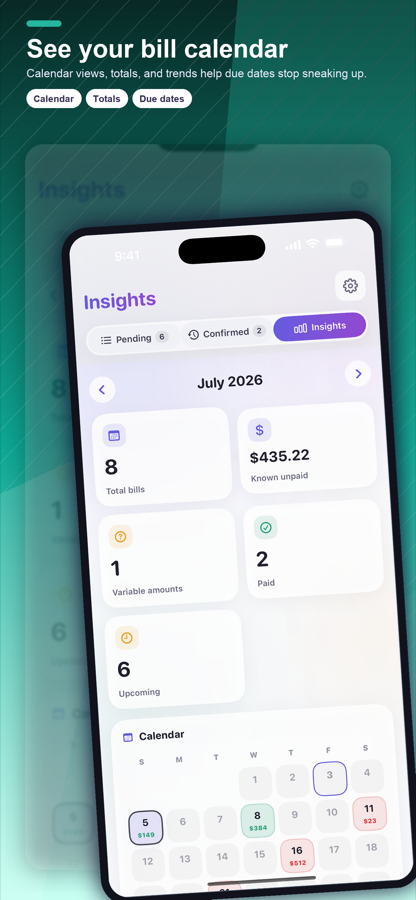
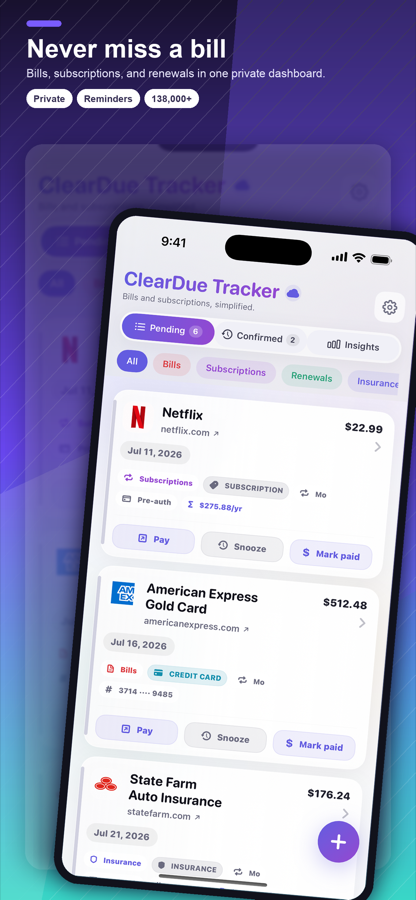
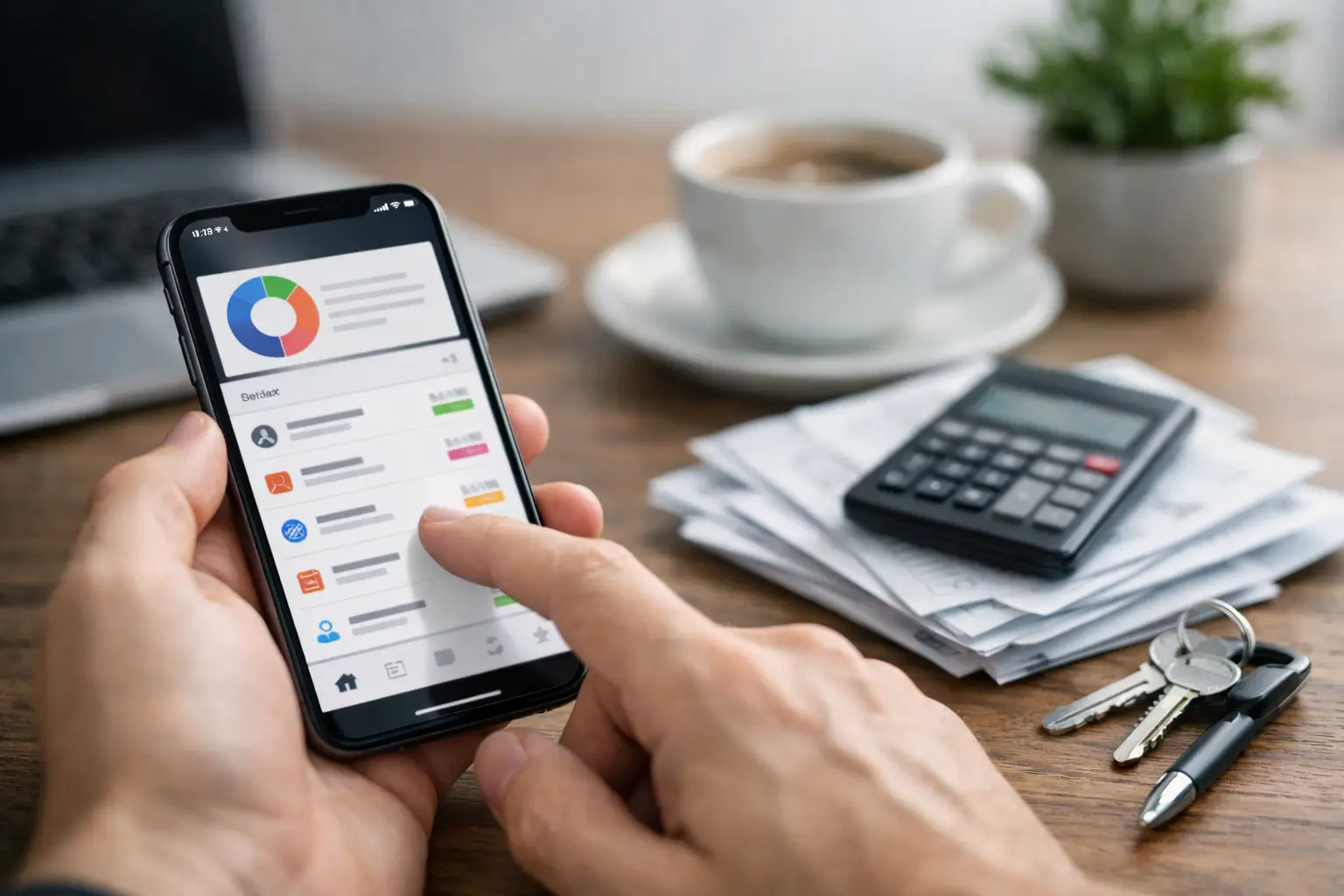
For iPhone users, a bill tracking app can make the process much more manageable because it keeps your recurring obligations visible in a format that fits everyday life. Instead of piecing together reminders from different places, you can keep upcoming bills, payment frequency, and due dates organized in one mobile-first system.
ClearDue Tracker is built for exactly that kind of use. It is designed to help people track bills, subscriptions, renewals, and recurring due dates without turning the task into a complicated finance project. The point is clarity. You can see what is coming up, stay ahead of recurring obligations, and reduce the stress that comes from trying to remember everything yourself.
That kind of tool is especially useful when your bills are not all monthly. Annual renewals, quarterly charges, and trial-to-paid subscriptions are often the easiest to overlook because they do not follow your regular routine. Tracking them in one place makes them easier to spot before they become a surprise.
How to know if your bill tracking system is working
A good bill tracking system should make life feel lighter, not more crowded. You should be able to check what is due soon, confirm what has already been handled, and understand your recurring obligations without hunting through emails or account logins.
It does not need to be perfect. Some people want detailed records. Others just want dependable reminders and a clear view of upcoming payments. The right setup depends on how many bills you manage, how often they recur, and how much visibility you want.
What matters most is consistency. If your system is too complicated to keep updated, it will not help for long. If it is simple enough to maintain, you are much more likely to stick with it.
Bill tracking is really about creating a calmer way to manage repeat responsibilities. When you know what is due and when, everyday money tasks take up less mental space, and that can make the rest of life feel a little more under control.