A forgotten free trial rarely feels expensive at first. Then it renews, stacks on top of three other monthly charges, and suddenly your statement includes payments you barely remember agreeing to. A good recurring payments tracking guide is really about one thing: reducing surprises.
Most people do not miss recurring charges because they are careless. They miss them because the details are scattered. One bill is in email, another is tied to a card you rarely use, and a yearly renewal shows up long after you stopped thinking about it. When recurring payments live in too many places, they are hard to see clearly and even harder to manage consistently.
Why recurring payments get missed so easily
Recurring payments are designed to fade into the background. That is part of their appeal. Utilities, streaming services, memberships, cloud storage, school fees, and annual renewals all keep going without much effort from you. The problem is that the same convenience that makes them easy to start also makes them easy to forget.
Monthly charges are usually not the biggest issue. Annual, quarterly, and irregular renewals tend to cause more trouble because they do not stay top of mind. A charge that appears once a year can feel random even when you approved it yourself.
There is also a mental clutter problem. Many households are not managing one or two recurring obligations. They are managing dozens. Some belong to one person, some belong to a partner, and some are tied to the home itself. Without a simple system, you end up relying on memory, inbox searches, or old statements when you need answers quickly.
A recurring payments tracking guide for real life
The best system is not the one with the most features. It is the one you will actually keep updated. For most people, that means keeping recurring payments in one place, using plain categories, and setting reminders before charges hit.
Start by thinking in terms of visibility, not analysis. You do not need a complicated setup to stay organized. You need to know what is charging, when it is due, how often it repeats, and whether it still belongs in your life.
Step 1: Gather every recurring charge in one pass
Pull up the last two to three months of card statements and bank activity and look for anything that repeats. Then check your email for phrases like renewal, subscription, membership, auto-pay, billing, and annual plan. This catches the charges that may not show up every month.
As you gather them, record the name, amount, due date or renewal date, payment frequency, and payment method if you know it. Do not worry about making it perfect on the first pass. The goal is to build a full picture.
This step often reveals small charges that have been slipping by unnoticed. It also shows where your recurring obligations are spread out across different accounts and cards.
Step 2: Separate bills from subscriptions
Not every recurring payment needs the same kind of attention. Essential bills like rent, utilities, phone service, and insurance generally stay in place. Subscriptions and memberships deserve a little more review because they are easier to forget and easier to outgrow.
That distinction matters because it changes how you track them. Bills are mostly about staying ahead of due dates. Subscriptions are about due dates and usefulness. If you mix everything together without context, the list becomes harder to manage.
Step 3: Track the date that matters most
For some payments, the key date is the bill due date. For others, it is the renewal date or trial end date. If you only record the charge after it happens, you lose the chance to act before it renews.
That is why reminders matter. A useful reminder is not one that arrives the day after the charge posts. It arrives early enough for you to review the payment, move money if needed, or cancel something you no longer want.
Step 4: Add a quick review habit
Recurring payment tracking is not a one-time cleanup. It works best when you build in a short review once a month. This does not need to take long. Five to ten minutes is often enough to check what is coming up, confirm expected charges, and update anything that changed.
This is where people usually stay organized or fall behind. If your system only gets attention when there is a problem, it becomes reactive. A simple monthly check keeps it useful without turning it into a chore.
What to include in your tracking system
A recurring payments tracking guide should stay simple enough to use, but detailed enough to prevent confusion later. At minimum, each item should include the payment name, amount, frequency, next due or renewal date, and a short note if needed.
Notes help more than people expect. A short note like annual family plan, promotional rate ends in July, or paid on partner's card can save time the next time you review the list. Small details are often what make the difference between feeling organized and feeling unsure.
You may also want to mark which charges are fixed and which can change. Utility bills, for example, may vary month to month. Streaming services may stay consistent until a price increase hits. Knowing that difference helps you spot unexpected changes faster.
Common tracking mistakes to avoid
One common mistake is relying only on bank statements. Statements are useful for catching charges that already happened, but they are weaker for planning ahead. If the goal is fewer surprises, your system should show what is coming before it arrives.
Another mistake is tracking only the amount. Amount matters, but date and frequency matter just as much. A $12 monthly charge and a $120 annual renewal create different kinds of pressure on your schedule and your attention.
People also make the mistake of overbuilding the system. If tracking recurring payments starts to feel like bookkeeping, many people stop using it. A lighter system usually lasts longer.
When a mobile reminder system works better than a spreadsheet
Spreadsheets can work, especially if you already use them regularly. But they also depend on you remembering to open them. For busy adults juggling work, family, errands, and household responsibilities, that is often the weak spot.
A mobile-first system is usually easier to maintain because it fits the way people actually check information during the day. When a due date, renewal, or recurring charge is stored where you can review it quickly, staying ahead feels more natural.
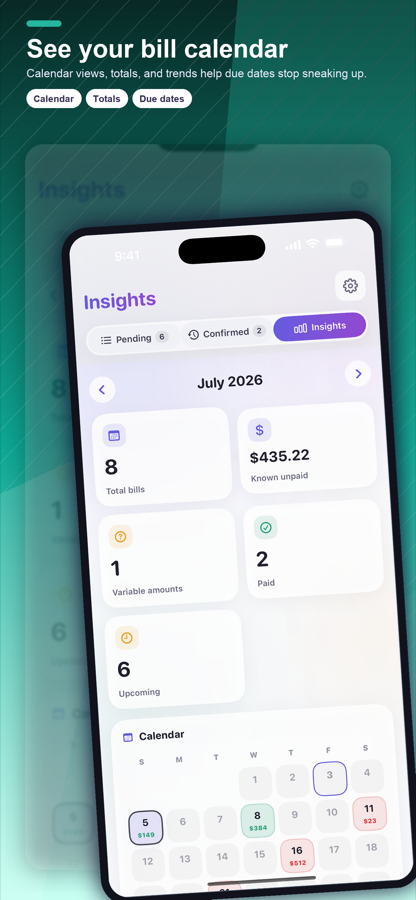
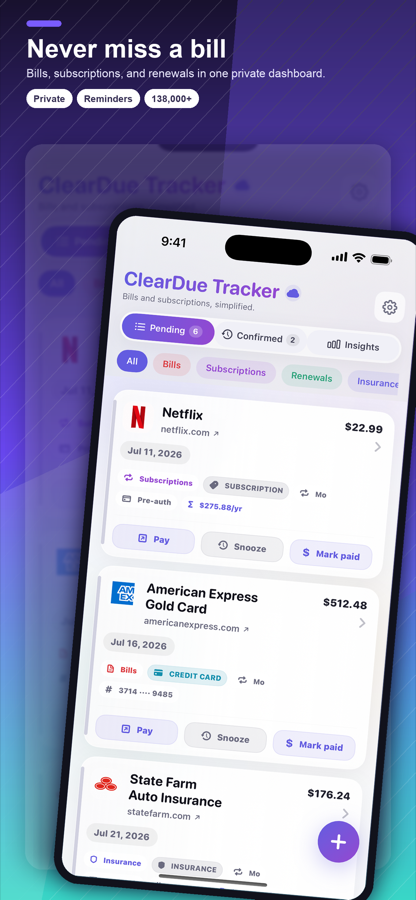
For iPhone users who want a simpler way to organize recurring bills, subscriptions, and due dates, ClearDue Tracker fits this use case well. It is built around visibility and reminders, which is often what people need most when recurring obligations are spread across too many places.
How to decide what deserves closer attention
Not every recurring payment needs the same review schedule. Essential household bills should stay visible so you are not caught off guard by due dates. Optional subscriptions should get a little more scrutiny, especially if they renew annually or are easy to forget.
A good rule is to pay extra attention to three types of charges: annual renewals, free trials, and services with price changes. These are the payments most likely to feel unexpected, even when they are technically familiar.
It also helps to flag anything tied to an old card, an old email address, or a service another household member signed up for. Shared finances are where recurring payments often get murky.
The real goal of recurring payments tracking
People sometimes think tracking recurring payments is mainly about cutting costs. That can be part of it, but it is not the whole point. The larger benefit is clarity.
When you know what is scheduled, what is essential, and what is optional, routine expenses stop feeling random. You spend less time searching through statements, less time second-guessing charges, and less energy trying to remember what renews when.
That kind of visibility is useful whether you are managing your own bills, sharing household responsibilities with a partner, or trying to stay ahead of a long list of monthly obligations. The system does not need to be complicated. It just needs to be easy to trust.
If your current approach depends on memory, inbox digging, or hoping you will remember before the next renewal, that is usually the sign to simplify. A steady tracking habit gives you fewer surprises now and a calmer month every time the next due date rolls around.