You remember the bill when you see the envelope on the counter. You remember the subscription when the renewal email hits your inbox. And then one busy week throws everything off. That is usually when the paper bill planner vs app question stops being theoretical and starts feeling very practical.
Both systems can work. The better choice depends on how you actually manage your life, not how you wish you did. If you like writing things down, a paper planner can feel grounding and easy to trust. If your schedule changes often and your reminders need to follow you around, an app usually makes daily bill management much easier.
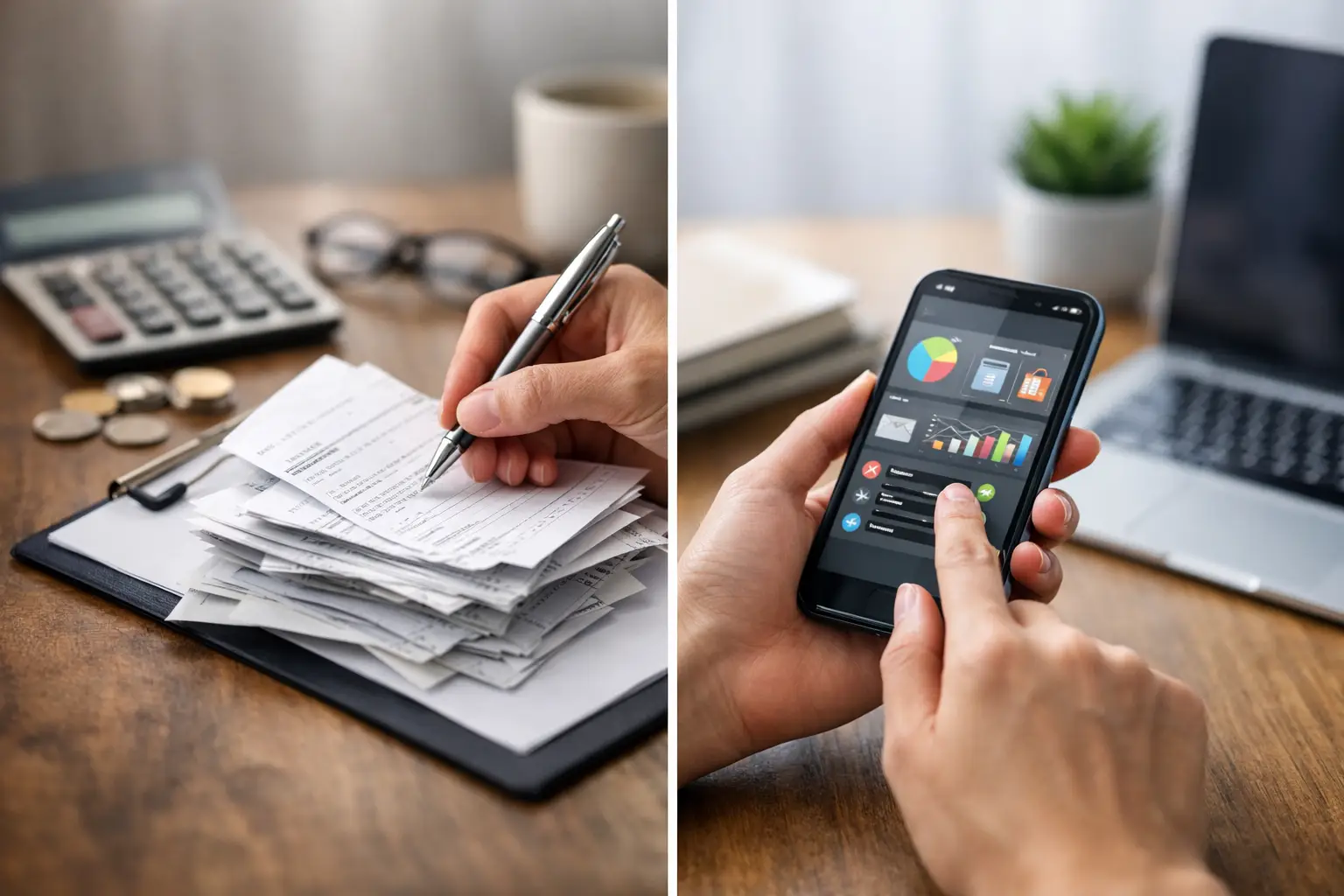
Paper bill planner vs app: the real difference
The biggest difference is not paper versus digital. It is whether your system helps you notice what is due before it becomes urgent.
A paper bill planner gives you one fixed place to write due dates, payment amounts, and monthly notes. For some people, that physical act of writing helps information stick. It can also feel less distracting than using your phone, especially if you are trying to avoid bouncing between apps.
An app gives you visibility that moves with you. Instead of hoping you check the planner at the right time, you can see upcoming bills while standing in line, sitting in the carpool lane, or reviewing your month before bed. That convenience matters more than it sounds. Most missed payments do not happen because people do not care. They happen because information is scattered, timing slips, and reminders come too late.
Where a paper bill planner still works well
Paper is not outdated just because it is low tech. It has a few clear strengths.
First, it is simple. There is nothing to set up beyond your own layout. You can open to the month, write down your utilities, rent or mortgage, subscriptions, and recurring dates, and you are done. If you prefer seeing the whole month at a glance, paper can feel calm and straightforward.
Second, paper can support a routine. If you sit down every Sunday night with your planner, review what is due, and update it consistently, that habit may be enough. People who enjoy handwriting and already use paper calendars often do well with a paper bill tracker because it fits into an existing system.
Third, some households like a shared visual reference in the kitchen or home office. A written planner can act as a cue for anyone in the house to check what is coming up.
But the strength of paper depends on consistency. If the planner stays closed in a drawer for two weeks, it stops helping.
Where paper starts to break down
The weakness of a paper planner is not that it is paper. It is that life rarely stays neat.
Due dates change. Trial subscriptions turn into paid renewals. Annual charges appear months after you forgot about them. A note scribbled in the margin may make sense today and be confusing next month. If you miss one weekly review, your system can quickly become a record of what happened rather than a tool for what is next.
Paper also depends heavily on memory. You have to remember to check it, remember to update it, and remember to carry key information with you if you are away from home. That is manageable for a small number of recurring bills. It gets harder when you are juggling streaming services, utility bills, school payments, annual renewals, and household subscriptions across different accounts and dates.
There is also the issue of visibility. A paper planner cannot nudge you when a due date is close. It sits where you left it. For some people that is fine. For others, it is exactly why bills get paid later than intended.
Why an app works better for many households
An app is usually the stronger option if your main challenge is not understanding your bills, but keeping track of them consistently.
That is where digital reminders change the experience. Instead of relying on a monthly check-in, you can get prompted before a due date arrives. That small shift reduces mental load. You do not have to hold every obligation in your head or hope a sticky note catches your eye at the right moment.
Apps also make updates easier. If a payment amount changes or a renewal date shifts, you can adjust it quickly. That matters because recurring obligations are rarely as fixed as people think. The more dynamic your household bills are, the more useful a flexible mobile system becomes.
There is also a visibility advantage. With an app, your bill information is in the same place each time you check it. You are not flipping through old pages, trying to decode a notation system you made up six months ago. You can review what is coming up, what repeats monthly, and what only shows up once a year without rebuilding your system every month.
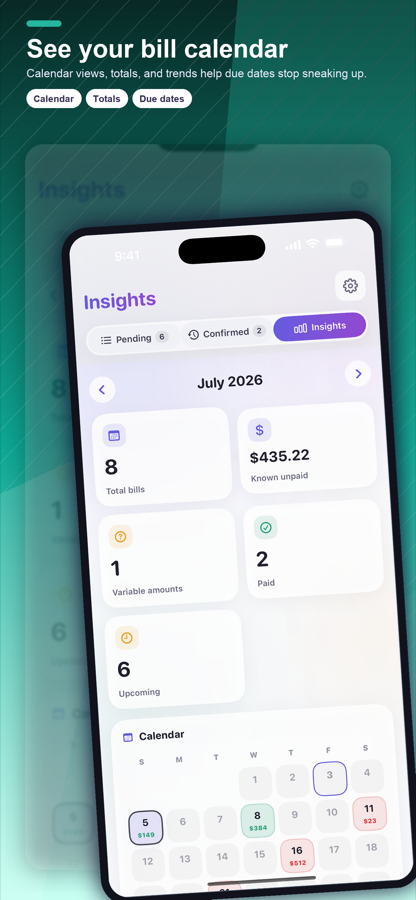
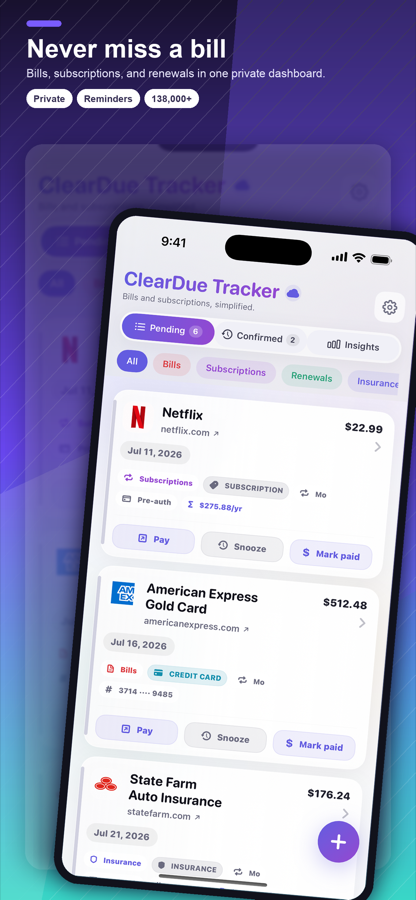
For iPhone users who want a straightforward way to manage recurring bills, subscriptions, and reminders, ClearDue Tracker fits this kind of everyday use especially well. It is built around staying ahead of due dates and keeping recurring obligations visible, which is often the exact problem a paper planner struggles to solve over time.
Paper bill planner vs app for different personality types
This is where the answer becomes more personal.
If you are someone who genuinely enjoys writing things down, follows a planner routine, and keeps your monthly paperwork organized, paper may feel more natural. It can be enough if your bills are predictable and your system is already working.
If you tend to remember things only when they are in front of you, an app is often the better fit. The same goes for people who manage a lot on the go. Parents, homeowners, renters with multiple subscriptions, and anyone handling household logistics from their phone usually benefit from having bill reminders with them instead of on a desk at home.
An app is also the better choice if you have ever said, "I knew that was coming, I just forgot the date." That is not really a planning problem. It is a visibility problem.
The trade-off most people ignore
A paper planner can feel more intentional. An app can feel more automatic. Neither quality is always good or bad.
Paper asks more from you. That can create stronger awareness, but it also creates more opportunities for the system to fail when you are tired or distracted. An app reduces manual effort, but only if you actually trust yourself to use it and respond to reminders.
The best system is not the one that sounds more disciplined. It is the one you will keep using in real life. If a paper planner makes you feel organized for three days and then disappears under the mail, it is not the better method. If an app sends reminders that you ignore because you have too many notifications, that is not a perfect solution either.
This is why setup matters. Digital tools work best when they are focused on a real problem, not loaded with extras you do not need. For bill tracking, a simple reminder-based app often does more than a complicated system that tries to do everything.
Should you ever use both?
Sometimes, yes, but only if each one has a clear job.
A paper calendar can still be useful for a broad monthly view, while an app handles recurring due dates and reminders. That said, two systems can also create confusion if you are updating one and forgetting the other. If you use both, one should be your reference and the other should be a backup, not a second source of truth.
For most people, combining systems sounds smart but becomes one more thing to maintain. If your current problem is mental clutter, simpler is usually better.
How to decide without overthinking it
Ask yourself one practical question: where do bill-related mistakes usually happen for you?
If the issue is that you do not have one place to write things down, a paper planner might help. If the issue is that you forget to check the planner, miss renewals, or lose track of recurring dates across a busy schedule, an app is probably the stronger choice.
It also helps to think about what you need from your system in the middle of an ordinary Tuesday. Not during a perfect planning session. Not at the start of a new year. In normal life. If you need quick access, reminders, and a clearer view of what is due next, digital usually wins.
A good bill system should lower stress, not become another chore to manage. If paper gives you that clarity, keep it. If you need something more visible and reliable day to day, an app will likely serve you better. The right choice is the one that helps you stay ahead without having to think so hard about staying organized.