A due date rarely gets missed because someone does not care. More often, it gets buried under everything else. If you have ever paid a bill late, forgotten a subscription renewal, or remembered something important one day too late, learning how to remember due dates is less about trying harder and more about building a system you can trust.
That matters because due dates tend to repeat. Rent, utilities, streaming renewals, annual memberships, phone bills, and card payments do not usually surprise us. What trips people up is that the information lives in too many places. Some dates are in email, some on paper statements, some inside account dashboards, and some only in your head. That creates the kind of mental clutter that makes small tasks feel bigger than they are.
Why remembering due dates feels harder than it should
Most people are not dealing with one due date. They are managing a mix of monthly bills, quarterly charges, yearly renewals, and trial periods that turn into paid subscriptions. Even if each one seems manageable on its own, the full set is easy to lose track of.
Memory is also unreliable when the timing changes. A bill that usually hits at the same time each month might shift by a day or two. A subscription renewal might only come around once a year. Those are exactly the tasks that slip through when you rely on habit alone.
There is also a difference between noticing a due date and acting on it. Seeing an email reminder while you are in line at the grocery store is not the same as having a clear place to return to later. If your system depends on catching reminders in the moment, it will break the minute life gets busy.
How to remember due dates with a better system
The simplest answer to how to remember due dates is this: stop treating each due date like a separate memory task. Put them into one organized system where dates are visible, recurring, and easy to review.
A good system does three things. First, it stores the date in one consistent place. Second, it gives you a reminder before the deadline, not just on the day of. Third, it makes recurring items easy to carry forward without re-entering them every month or year.
This is why scattered methods often fail. A sticky note may help for one bill. A flagged email may work for one renewal. A note in your phone may help for another payment. But once your reminders are spread across several tools, you have created a second problem: remembering where you wrote everything down.
Start by gathering every recurring date
Before you can stay ahead of due dates, you need a complete picture of what you are actually tracking. Most people underestimate this step. They think of the obvious bills, then forget annual subscriptions, auto-renewing services, school fees, or household accounts that only show up occasionally.
Set aside a little time and pull your due dates from the places they usually hide: your bank transactions, recent statements, email confirmations, account dashboards, and calendar entries. As you review them, note the name of the bill or subscription, the amount if helpful, the due date, and how often it repeats.
This first pass does not need to be perfect. The goal is to stop holding everything in your head. Once the dates are collected, you can organize them in a way that makes future reminders much easier.
Give every date a home
One of the biggest improvements you can make is choosing a single place for due date tracking. That does not mean every account has to move. It means your reminder system should live in one place, not five.
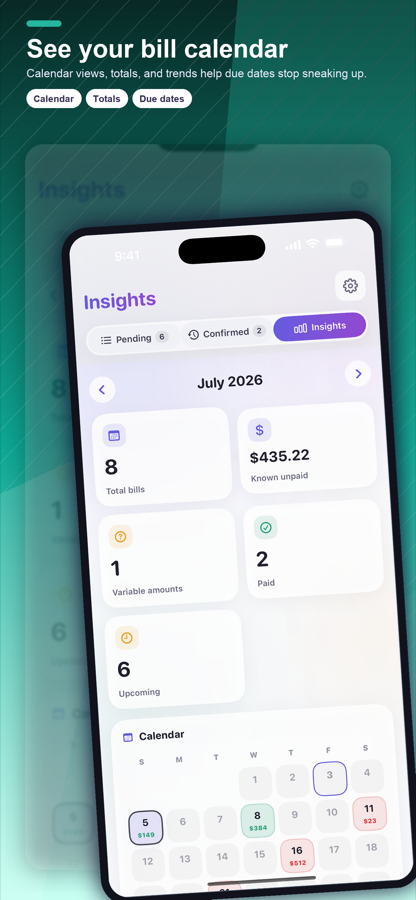
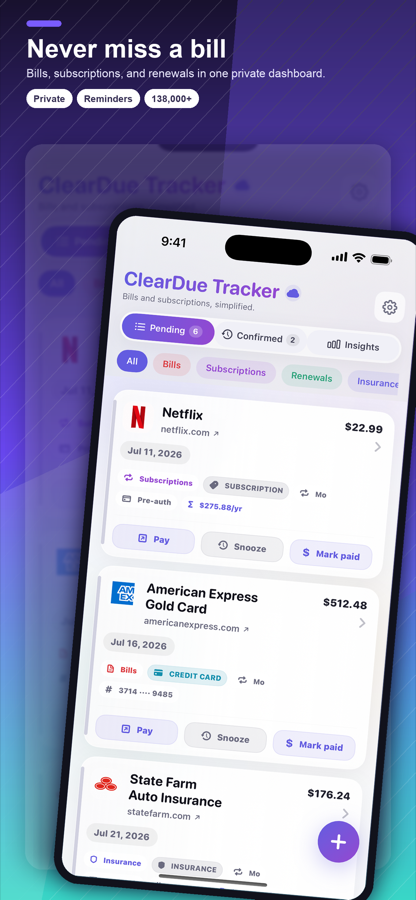
For bills, subscription renewals, and recurring payment obligations, that home should be built around visibility and reminders. ClearDue Tracker fits naturally here because it is designed for exactly this kind of everyday tracking. Instead of trying to remember which bill is due next and when an annual charge will come back around, you can keep those recurring obligations organized in one mobile-first view.
The real benefit is not just convenience. It is relief. When due dates are stored consistently, you do not have to mentally recheck everything all the time. You know where to look, and that makes it easier to trust your system.
Use earlier reminders, not last-minute ones
A reminder on the due date is often too late. If payment needs to happen before work, or if you want time to review the charge, same-day alerts can create pressure instead of preventing it.
A better approach is to set reminders with enough cushion to act. For a monthly utility bill, that might mean two reminders: one several days in advance and one the day before. For an annual renewal, you may want a reminder a few weeks ahead so you can decide whether to keep it.
This is especially helpful for subscriptions. Many people do not forget that they signed up. They forget when the renewal is actually coming. A reminder before the charge gives you time to make a choice instead of noticing it after the payment has already gone through.
Match the system to the kind of due date
Not every due date needs the same treatment. Monthly bills benefit from a steady rhythm. You want them easy to scan and easy to check off mentally. Annual renewals need stronger visibility because they are easier to forget. Trial periods and promotional pricing changes need earlier attention because the decision window is shorter.
This is where a lot of generic reminder methods fall short. They treat every date as equal, even though some require action, some require review, and some just need a simple heads-up. The more your system reflects real life, the more likely you are to use it.
If you manage due dates with a partner or for a household, clarity matters even more. The issue is not just remembering the date. It is knowing who is handling it, whether it has already been paid, and whether the timing has changed. A shared understanding starts with a clear record.
Build a short review habit
Once your due dates are organized, you do not need to think about them every day. But you should review them regularly. A five-minute weekly check is often enough to stay ahead.
During that review, look at what is coming up, what has already been handled, and whether any upcoming renewals need attention. This small routine keeps the system active. It also catches things that can slip through, such as a card on file expiring or a yearly charge returning sooner than expected.
A monthly review can help too, especially at the start or end of the month when many bills cluster together. The point is not to create more admin work. It is to replace low-level worry with a quick, predictable check-in.
What to do if you have already tried calendars and still forget
If calendar reminders have not worked well for you, the problem may not be the reminder itself. It may be the format. General calendars are great for appointments, but recurring obligations often need more structure than a single event title can provide.
A due date system works better when it shows the type of obligation, how often it repeats, and what is coming next in a way that is easy to scan. That is especially true if you are tracking more than a few items. At that point, organization matters as much as notification.
It also helps to reduce duplicate systems. If you enter some bills in a calendar, keep others in email folders, and remember the rest from habit, there is no clear source of truth. Simplifying that setup is often the fastest way to improve follow-through.
The goal is not perfect memory
When people look for advice on how to remember due dates, they often assume they need better discipline. Usually, they need less friction. The right system lowers the number of things you have to remember manually and gives recurring obligations a reliable place to live.
That does not mean you will never miss anything. Life still gets messy. Accounts change, renewal dates move, and some months are more chaotic than others. But with a clear system, one forgotten date does not turn into a constant pattern.
The most useful setup is the one you will actually maintain. Keep it simple, keep it visible, and make sure reminders arrive early enough to help. When your due dates are organized in a way that matches real life, staying on top of them starts to feel much less like remembering and much more like being in control.
A good due date system should make your week feel lighter, not more complicated. If it helps you stop second-guessing what is due next, it is doing its job.