That gym membership you meant to cancel, the streaming plan that quietly renewed, the software trial that turned into a charge - monthly renewals rarely cause trouble one at a time. The problem is how easily they pile up. If you want to know how to manage monthly renewals, the answer is not working harder to remember them. It is building a system that makes renewals visible before they happen.
For most people, renewals are scattered across email receipts, banking transactions, notes apps, and pure memory. That works until life gets busy. Then a charge slips through, a payment date gets missed, or you keep paying for something you no longer use. A better approach is simple, repeatable, and easy to maintain from your phone.
Why monthly renewals get messy so fast
Monthly renewals are easy to ignore because they feel small and automatic. A few dollars here, a subscription there, one utility bill on a different date than the others - none of it looks urgent in isolation. But together, they create mental clutter. You are not just paying recurring charges. You are also keeping track of timing, account details, payment methods, grace periods, and whether each renewal still makes sense.
There is also a difference between a bill and a renewal, even if they can look similar on your card statement. Bills like internet or utilities are expected household obligations. Renewals often involve subscriptions, memberships, service plans, or recurring charges that may continue unless you step in. That difference matters because renewals need review, not just reminders.
How to manage monthly renewals with a simple system
The most effective system has three parts: one place to track everything, one schedule for reviewing it, and one clear action for each item. If any part is missing, renewals tend to drift back into the background.
Start by gathering every recurring monthly charge you can find. Look through recent statements and email confirmations and write down the name of the service, the amount, the renewal date, and the payment method. If canceling requires extra steps, note that too. Some services are easy to stop. Others make you log in through a specific account, use a different platform, or cancel before a cutoff date.
Once you have the full list, sort each renewal into one of three categories: keep, review, or cancel. Keep means you use it regularly and expect it to continue. Review means you are unsure of the value or need to compare it against alternatives. Cancel means it is no longer worth carrying. This one step brings a lot of clarity because it turns a vague pile of charges into a plan.
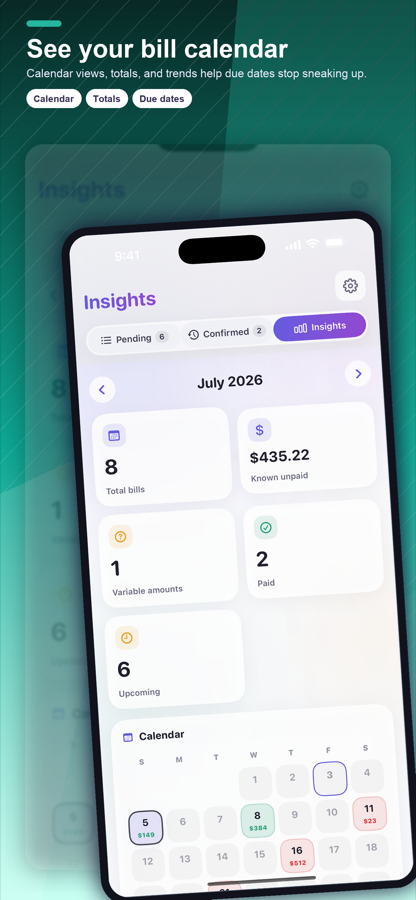
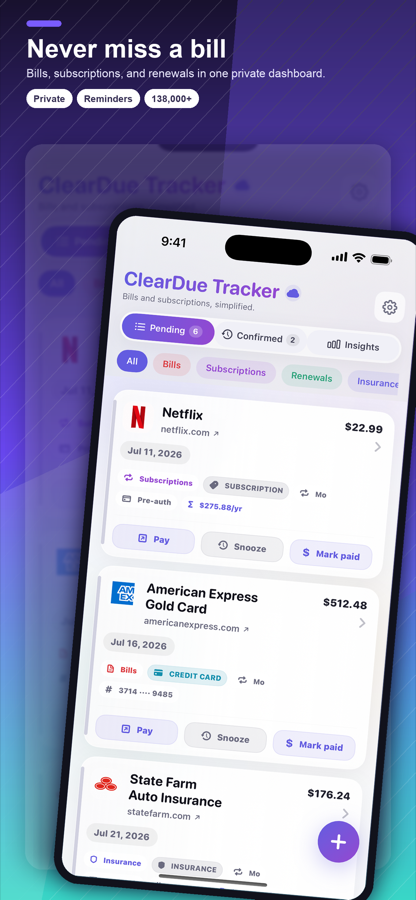
For ongoing visibility, many people benefit from using ClearDue Tracker to keep recurring bills, subscriptions, and renewal reminders in one place. The main advantage is not complexity. It is being able to see what is due, what is coming up, and what needs attention without piecing it together from multiple sources.
Put dates and decisions in the same place
A common mistake is tracking renewal dates in one place and the decision about that renewal somewhere else. For example, the due date may live in your calendar while your note to cancel sits in your inbox. That split creates friction, and friction leads to inaction.
Instead, keep the practical details together. Each monthly renewal should have a due date, expected amount, payment method, and a short note about whether you still want it. If a service offers a free trial before converting to a paid plan, track the trial end date rather than the first paid month alone. If a renewal tends to increase in price after a promotional period, add a reminder to review it before the change hits.
This is especially useful for households where more than one person signs up for services. Two adults may each assume the other knows about a charge, and neither one checks it until months later. A shared understanding starts with a single record of what exists.
Review renewals before they renew
The biggest shift in managing monthly renewals is timing. Most people review charges after they appear. That is understandable, but it limits your options. By the time a charge posts, the renewal has already happened.
A better rhythm is to review renewals a few days before their date. That gives you time to make a decision while there is still something to decide. For some services, three to five days is enough. For others, especially subscriptions with stricter cancellation windows, a week or more is safer.
Your review does not need to be long. Ask three questions. Did I use this in the last month? Would I notice if it disappeared next month? Is the current cost still acceptable? If the answer is unclear, move the item into review instead of defaulting to another month of passive spending.
This is where reminders matter. Not because you cannot remember anything, but because monthly obligations are easy to lose in the middle of work, errands, family life, and everything else competing for attention.
Treat essential bills differently from optional renewals
Not every recurring charge should be handled the same way. Essential bills need consistency. Optional renewals need scrutiny. If you treat them all as identical line items, you miss the chance to simplify what must be paid and question what does not need to continue.
Your phone bill, internet service, or other expected monthly obligations may mostly need dependable due-date tracking. A streaming platform, digital subscription, club membership, or extra storage plan may need regular review. The point is not to cut everything. The point is to avoid carrying things by default.
This trade-off matters because convenience can work both ways. Auto-renewal protects you from service interruption, which is helpful for essentials. But it can also keep low-value subscriptions alive because canceling takes more effort than ignoring the charge. Good renewal management keeps the convenience while reducing the drift.
Watch for the renewals that hide in plain sight
Some monthly renewals are obvious because they arrive like clockwork. Others are harder to spot. Introductory offers, paused subscriptions that restart, app-based services billed through different accounts, and small recurring charges can all slip under the radar.
If something renews through an app store account rather than directly with the provider, the billing path may not be where you first think to look. If the amount changes from month to month, it may not stand out as a single recurring line. If a service was added during a busy period, you may barely remember signing up.
That is why a monthly scan of recent charges is still useful, even when you have a strong system. The goal is not to start over every month. It is to catch the one or two items that entered your life quietly and never got organized.
Keep the system light enough to maintain
The best renewal system is one you will actually keep using. If it takes too many steps, you will postpone updates, and postponed updates become missing information.
Keep your process small. Add a new renewal when you sign up. Update the amount if it changes. Mark whether you plan to keep, review, or cancel it. Check upcoming dates once a week. That is usually enough for household use.
It also helps to avoid building your system around perfect behavior. You will not remember every charge immediately. You may miss a review here and there. A practical system should recover easily from real life, not depend on flawless habits.
What to do when monthly renewals feel out of control
If your recurring charges already feel messy, do not try to clean up everything in one sitting unless you have the time and energy. Start with the next 30 days. Track what is renewing soon, decide what stays, and set reminders for the rest. Then expand from there.
This works because near-term visibility reduces stress fast. Once you know what is coming up this month, the pile feels smaller. You can make better decisions when you are not reacting late.
Over time, managing renewals becomes less about catching mistakes and more about keeping a steady overview. You know what is active, what it costs, when it renews, and whether it still belongs in your monthly life. That kind of clarity is not dramatic, but it is useful in exactly the way most household systems should be.
When monthly renewals are easy to see, they stop taking up so much space in your head.