A forgotten due date usually does not happen because someone is careless. It happens because bills live in too many places at once. One is on autopay, one comes by email, one renews every year, and one only shows up when the statement hits. A bill tracking calendar gives those moving pieces one clear home so you can see what is due and when.
For most people, the problem is not knowing that bills exist. The problem is keeping track of timing. Rent may be due on the first, a phone bill on the ninth, streaming renewals in the middle of the month, and an insurance payment every six months. When those dates are spread across inboxes, bank history, paper mail, and memory, staying organized starts to feel harder than it should.
What a bill tracking calendar actually does
A bill tracking calendar is a simple system for mapping recurring payments to real dates. At its core, it shows you what is due this week, what is coming next, and what repeats every month, quarter, or year. That may sound basic, but basic is often what works.
The real value is visibility. A calendar view turns a vague sense of financial clutter into something concrete. Instead of wondering whether you already paid the internet bill or when a subscription renews, you can look at one place and know.
That visibility helps with more than missed payments. It also helps you spot crowded weeks, notice annual renewals before they surprise you, and build a routine around upcoming due dates. Even if you are not trying to create a full budget, seeing your recurring obligations in one place can reduce a lot of mental noise.
Why scattered bill reminders stop working
Many people already have a system, at least technically. They may rely on email receipts, text alerts, sticky notes, or a mental checklist that mostly works until life gets busy. The issue is that these systems are disconnected.
Email can bury reminders under everything else. Paper calendars are easy to forget when you are away from home. Bank transaction history tells you what already happened, not always what is about to happen. And memory tends to fail at the worst possible time, especially with bills that come less often than once a month.
A bill tracking calendar works better because it is built around timing, not just recordkeeping. That difference matters. You do not just need proof that a bill exists. You need enough notice to act on it.
The best bill tracking calendar is the one you will actually maintain
Some people like a handwritten monthly planner. Others want a digital calendar. Some prefer a dedicated bill reminder app because it keeps bill dates separate from work meetings, birthdays, and everything else competing for attention.
There is no single perfect setup for everyone. A paper calendar can feel simple and visible, but it depends on being in the same place every day. A general phone calendar is convenient, but bill reminders can get lost next to every other event. A dedicated tool often works best when you want recurring due dates, reminders, and payment visibility without turning the process into a spreadsheet project.
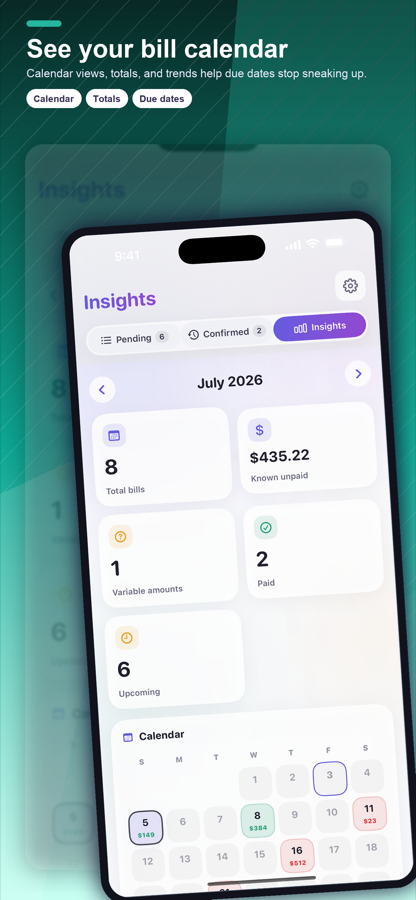
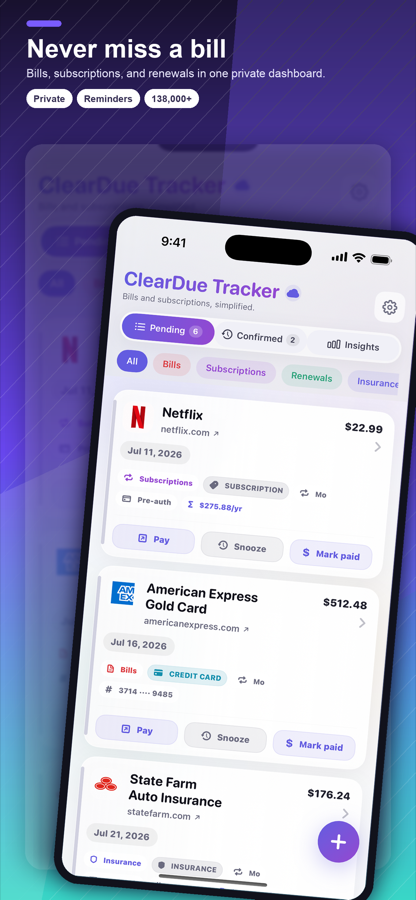
That is where a mobile-first option can feel easier to stick with. If your bill tracking calendar lives on your iPhone, it is available when you are checking a statement, reviewing a renewal notice, or trying to remember whether next week is a heavy bill week. ClearDue Tracker is built for that kind of everyday bill organization, with a focus on due dates, recurring obligations, and staying ahead of payments without overcomplicating the process.
How to set up a bill tracking calendar that helps right away
The setup does not need to be perfect on day one. It just needs to be complete enough to give you a reliable view of what is due.
Start with every recurring payment
Begin by gathering your regular bills and subscriptions. Think beyond utilities and rent. Include streaming services, phone plans, memberships, annual renewals, and any other repeating charge you are expected to remember.
This step is where people often realize the real issue is not one missed payment. It is that they have more recurring obligations than they thought. Seeing the full list can be clarifying, even before you add dates.
Add the actual due dates and frequency
Once you have the list, assign each bill a date and recurrence pattern. Monthly bills are obvious, but do not skip quarterly, semiannual, or annual charges. Those less frequent payments are often the easiest to forget because they are not part of a monthly rhythm.
If a due date shifts or depends on weekends, use the date you need to remember for action. In other words, if you want to pay two days early, track that earlier reminder date rather than the last possible day.
Make the calendar useful, not crowded
A bill tracking calendar should lower stress, not create more of it. That means keeping entries clear and readable. Use the bill name, amount if helpful, due date, and whether it is paid, upcoming, or renewed soon. You do not need extra details unless they help you make decisions.
This is also a good place to separate true bills from everything else on your schedule. If your calendar is packed with errands, appointments, and school events, a dedicated bill view may be easier to scan quickly.
Build in reminders before the due date
The reminder matters as much as the date itself. A same-day alert can work for autopay items you just want to monitor. For bills you pay manually, a few days of lead time is usually more helpful.
There is some trial and error here. Too many alerts can become background noise. Too little notice defeats the purpose. A good rule is to set reminders based on how long you realistically need to review or pay each bill.
What to include in your bill tracking calendar
The strongest bill calendars do more than list monthly due dates. They reflect the way real households operate.
Include fixed bills, variable bills, and subscriptions. Add annual charges like membership renewals or service plans. If you share responsibilities with a partner or family member, make sure the calendar reflects who handles what. If a bill is on autopay, mark that clearly so you are tracking it for visibility rather than action.
It also helps to note bills that tend to change amount or timing. Not because you need a complicated system, but because a quick glance should tell you what needs attention and what is routine.
Common mistakes that make a bill tracking calendar less helpful
One common mistake is only tracking the bills that are easy to remember. The harder ones matter more. Annual renewals, infrequent subscriptions, and due dates that arrive by email instead of mail are often the first to slip.
Another issue is creating a system that feels too detailed to maintain. If updating the calendar takes too much effort, it will not last. The goal is not to build a perfect financial archive. The goal is to stay aware of upcoming obligations.
There is also a tendency to rely too heavily on autopay. Autopay can be useful, but it does not replace awareness. You still need to know what is scheduled, what is renewing, and what amount is expected. A bill tracking calendar gives you that broader view.
A monthly habit that keeps the calendar working
A bill tracking calendar becomes more useful when you pair it with a short monthly check-in. This does not need to be a big planning session. Ten minutes can be enough.
At the start or end of each month, review what is coming up next. Confirm that due dates still look right, add any new subscriptions or renewals, and check for seasonal or annual charges that are getting close. That small routine keeps the calendar current and trustworthy.
Once the system is in place, the payoff is not just fewer missed payments. It is less second-guessing. You spend less time searching inboxes, less time wondering what is due next, and less energy trying to hold everything in your head.
A good bill tracking calendar does not need to be fancy. It just needs to give you a clear view of what is coming and enough notice to stay ahead of it. When your bills are organized in one place, staying on time starts to feel a lot more manageable.