Some people still have a notebook tucked in a kitchen drawer with due dates, account notes, and a few crossed-out payment entries. It works - until life gets busy, a page gets missed, or a recurring bill changes. That is really what the bill notebook vs app decision comes down to: not which method looks better, but which one helps you stay consistent when your schedule is full.
For many households, a notebook feels simple because it is familiar. An app feels better because it reduces the work of remembering. Neither choice is wrong for everyone. But they solve different problems, and the gap becomes obvious once you are managing more than a couple of bills, subscriptions, and renewal dates.
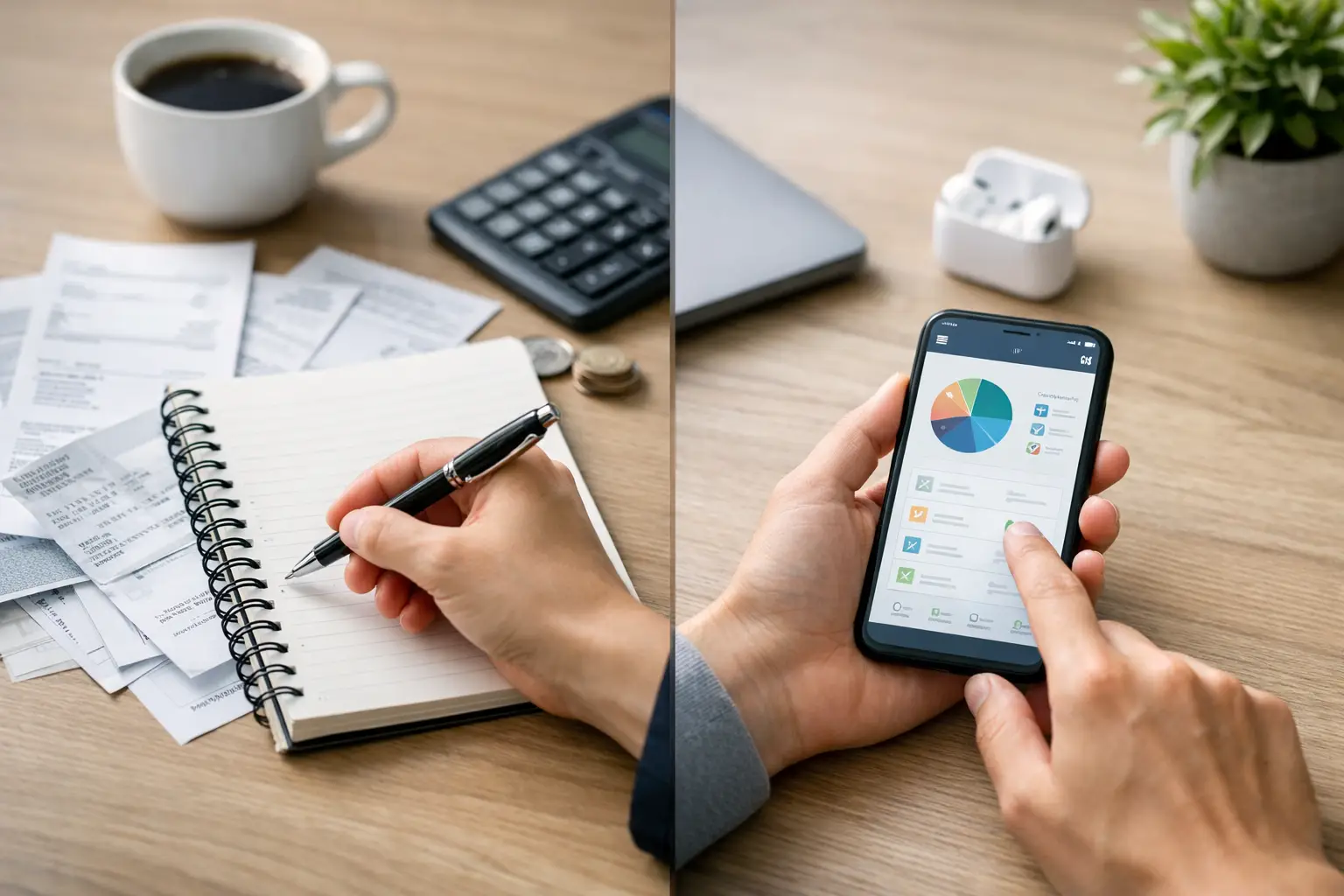
Bill notebook vs app: the real difference
A bill notebook is a manual system. You write down what is due, when it is due, and sometimes whether it has been paid. That can be enough if your bill routine is steady and you genuinely enjoy keeping written records.
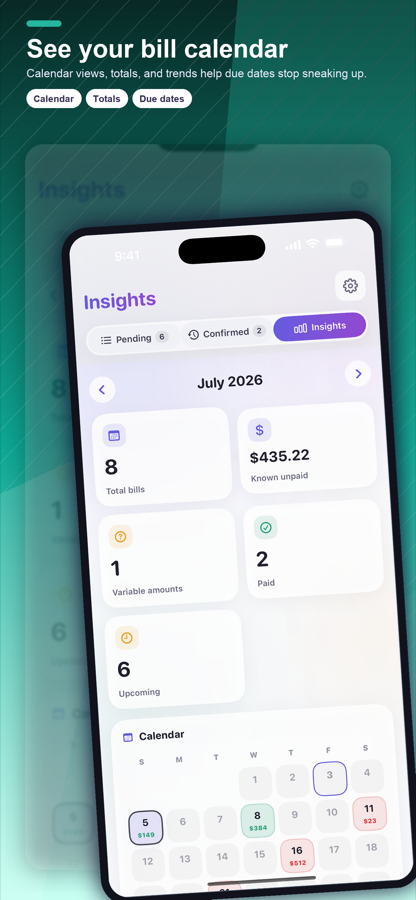
An app is an active system. Instead of just storing information, it helps you track recurring due dates, review what is coming up, and get reminders before something slips past you. That changes the experience from recordkeeping to day-to-day management.
The difference matters because most missed payments do not happen from lack of effort. They happen because information is scattered. One due date is in your head, another is in your email, a third was written down last month, and a yearly renewal is nowhere obvious until the charge hits.
A notebook can hold the details. An app can help keep them visible.
Where a notebook still works well
Paper has real strengths, and they should not be ignored. A notebook is easy to start, inexpensive, and comfortable for people who like writing things out. Some people remember better when they physically write a due date or check off a paid bill by hand.
A notebook can also feel less distracting. There are no notifications, no extra screens, and no temptation to jump into unrelated tasks. If you only manage a handful of monthly bills and your routine rarely changes, a notebook may be enough.
It can also work well for people who already have a strong bill-paying habit. If you sit down on the same day every week, review the same list, and rarely miss anything, a notebook may fit naturally into that process.
Still, paper tends to work best when life is predictable. The more moving parts you add, the more its limits show up.
Where notebooks usually start to break down
A notebook depends on you noticing and updating everything yourself. That is manageable at first. Over time, it can become one more thing to maintain.
If a bill amount changes, a renewal shifts, or a new subscription gets added, the system only works if you remember to rewrite it. If you skip one week, your notebook does not remind you that something is coming up. If your partner also manages part of the household, that information may still live in one place only one person checks.
The bigger issue is visibility. With paper, upcoming obligations are often buried in pages. You may have the information, but not the quick, current view that helps you act on it. There is a difference between having a record and having a reliable overview.
This is where many people start feeling mental clutter. They are not disorganized in a dramatic way. They just do not have one clear system that stays current without constant effort.
Why an app often fits modern bill management better
An app is usually better for recurring obligations because it keeps due dates, reminders, and payment tracking in one place you already use every day - your phone. That matters more than it sounds.
Most people do not forget bills because they are careless. They forget because timing is easy to lose track of. Monthly payments, annual renewals, trial periods, utilities, subscriptions, and household services all run on different schedules. A mobile app helps by bringing those dates back into view before they become a problem.
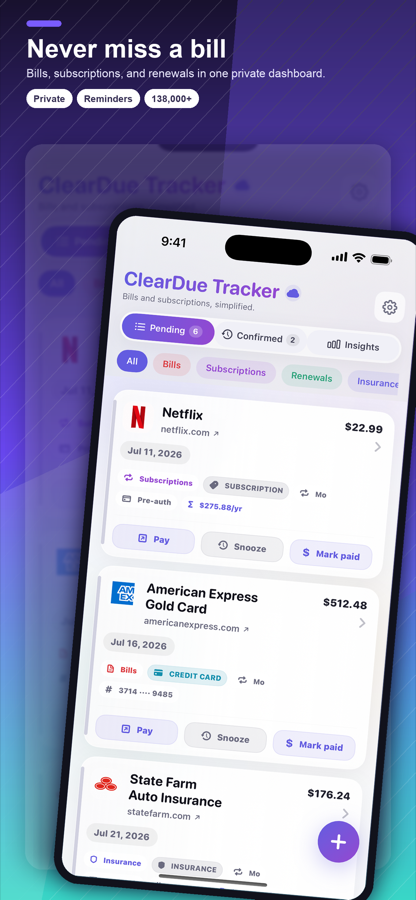
That is especially useful for households trying to stay ahead of recurring payments without building a complicated financial system. You do not need something heavy or technical. You need something clear enough to show what is due, what is recurring, and what needs attention next.
For iPhone users, ClearDue Tracker is built around that practical need. It helps organize bills, subscriptions, and recurring due dates in a way that is easier to maintain than a handwritten list. The benefit is not that it replaces responsibility. The benefit is that it reduces the number of things you have to hold in your head.
Bill notebook vs app for reminders and follow-through
This is usually the deciding factor.
A notebook cannot remind you. It waits for you to remember to open it. That works if you already have a strong review habit, but it adds risk if your weeks are uneven, your schedule changes, or you are managing multiple responsibilities at once.
An app supports follow-through because it is designed to bring due dates forward. Instead of hoping you check your notes at the right time, you have a tool that helps surface upcoming obligations when they matter.
That does not mean an app makes you perfect. You still have to use it. But it lowers the chances that a due date disappears into the background, especially for bills that are easy to forget because they are not paid every month.
Annual renewals are a good example. These are often where notebook systems fail. You may write the date down once, then not look at that page again until long after the renewal has passed. An app is simply better suited to handling that kind of long-gap reminder.
Which option is easier to keep up over time?
The better system is the one you will actually maintain in six months.
A notebook can feel easier at first because there is no setup beyond writing things down. But it often becomes harder over time because every update is manual. Cross-outs, rewrites, and extra notes can make the system less clear just when you need clarity most.
An app may require a little setup at the start, but once your recurring bills and subscriptions are entered, it is usually easier to keep current. Changes are simpler to update, and your upcoming obligations stay easier to review at a glance.
That matters for busy adults, couples, renters, and homeowners who are not trying to create a perfect administrative system. They just want a reliable way to stay ahead of what is due.
In that sense, the bill notebook vs app question is really about maintenance. Do you want a system you rebuild by hand, or one that helps you keep track with less friction?
The trade-off: simplicity vs support
A notebook wins on familiarity. An app wins on support.
If you like paper, prefer low-tech tools, and have a very steady routine, a notebook may still serve you well. It is straightforward and personal. Some people will always find that more comfortable.
If your bills include subscriptions, irregular renewals, and recurring dates spread across the month and year, an app usually gives you more control with less effort. Not because it is more advanced, but because it is more visible and more timely.
That trade-off is worth being honest about. Paper feels simple at the moment you write on it. An app often feels simpler in real life because it helps you remember what needs attention without relying on memory alone.
So, should you use a bill notebook or an app?
If your current system is working consistently, there is no reason to abandon it just because digital tools exist. The goal is not to use the newest method. The goal is to avoid missed due dates, forgotten renewals, and the stress of wondering what is coming up next.
But if your notebook is becoming a place where information goes to sit rather than a system that actively helps you stay on track, that is a sign. If you are rewriting the same bills every month, missing annual reminders, or mentally carrying too much of the process, an app is likely the better fit.
The strongest case for using an app is not convenience for its own sake. It is peace of mind. When your bill system is easy to check, easy to update, and easy to trust, everyday life feels lighter.
The right tool should make your responsibilities feel more manageable, not more scattered. If that means keeping a notebook, keep it. If it means moving to an app that helps you stay ahead instead of catching up, that is a practical upgrade worth making.