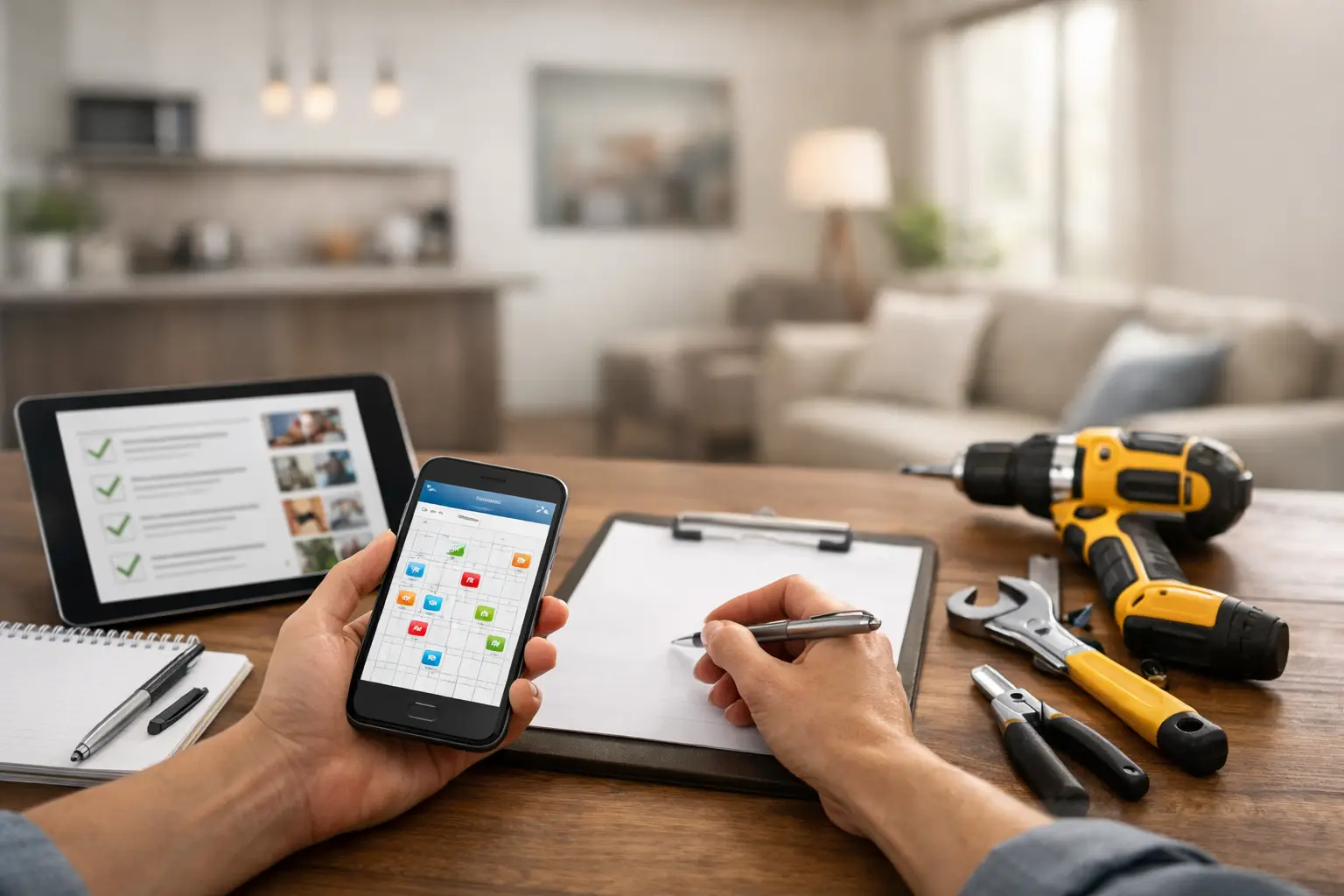
The furnace filter gets changed once, the water heater gets flushed eventually, and the appliance manual ends up in a kitchen drawer that no one checks again. That is usually how home upkeep starts to slip. If you are trying to figure out how to track home maintenance, the real issue is rarely motivation. It is that the details live in too many places, and the timing is easy to forget.
A good maintenance tracking system should make your home easier to manage, not turn it into another project. You do not need a giant spreadsheet or a wall calendar full of chores. You need one place for your home information, a realistic schedule, and reminders that show up before something gets overlooked.
Why home maintenance is hard to track
Most home maintenance tasks are not urgent until they suddenly are. Cleaning gutters, servicing an HVAC system, checking warranties, or replacing a water filter can all sit quietly in the background for months. That makes them easy to postpone, especially when everyday life is already full.
There is also a record problem. The purchase date for the dishwasher might be in an email. The warranty might be in a folder somewhere. The last service visit might be on a paper invoice tucked into a junk drawer. Even organized households end up with scattered information, and scattered information is hard to use when you need it.
That is why the best approach is not just a task list. It is a simple home record system that connects the task, the item, and the reminder.
How to track home maintenance with a simple system
Start by thinking in categories, not in random chores. Most homes have recurring maintenance in a few predictable areas: HVAC, plumbing fixtures, major appliances, seasonal exterior tasks, filters, detectors, and warranty-covered items. Once you group things that way, it becomes easier to see what actually needs attention and when.
The next step is to build a home inventory that supports those tasks. For each appliance or home system, keep the basic details together: what it is, when it was installed or purchased, any warranty information, model details, service notes, and the maintenance tasks tied to it. This matters because maintenance is easier to stay on top of when it is linked to a real item instead of written as a vague reminder like "check furnace stuff."
For example, your air conditioner might need an annual service check, your refrigerator may have a water filter that needs replacement every six months, and your smoke detectors may need regular battery checks. These are very different tasks, but they all become manageable when each one is tied to a clear record.
What to include in your home maintenance tracker
A useful tracker does not need to include every possible detail. It just needs enough information to help you act quickly when the time comes.
For each item in your home, keep the name of the appliance or system, where it is located, purchase or installation date, warranty details, service provider information if you want it handy, and any recurring maintenance schedule. If you have receipts, manuals, or service notes, keeping those attached to the same record makes the system much more useful later.
The key is consistency. A modest amount of organized information for every major home item is better than a perfect record for two appliances and nothing for the rest.
Set reminders based on real timing
One reason people give up on maintenance trackers is that they create a system that is too ambitious. If your schedule is packed with weekly checks and overly detailed routines, you will stop looking at it. Home maintenance tracking works better when the timing reflects real life.
Some tasks belong on a seasonal schedule. Others make more sense monthly, every six months, or once a year. There is no prize for making it complicated. The goal is to create reminders early enough to prevent forgetfulness, but not so often that they become background noise.
This is where a mobile-first setup helps. An app like ClearDue Abode fits naturally because it is built for home organization, appliance records, warranty tracking, household documents, and maintenance schedules in one place. That means your reminder is connected to the item it belongs to, instead of floating around separately in a general calendar or notes app.
Use maintenance history to reduce guesswork
Tracking home maintenance is not only about future reminders. It is also about looking back with confidence. When did the sump pump last get checked? Was the dishwasher ever serviced? Is the water heater still under warranty? These questions come up more often than most people expect.
A maintenance history gives you a clear record of what happened and when. That can help you avoid duplicate service, spot neglected tasks, and make better decisions when an appliance starts acting up. It is also useful when you move, replace equipment, or need to find documents quickly.
This does not need to be detailed like a service log for commercial equipment. A practical household version is enough. Date, task completed, note if needed, and any document that belongs with it. That small amount of history can remove a lot of uncertainty.
Paper, spreadsheet, or app?
It depends on how you already manage your home. A paper binder can work if you are disciplined about updating it and always know where it is. A spreadsheet can work if you are comfortable maintaining rows, dates, and tabs. But both tend to break down for busy households because they rely on you remembering to check them.
That is the trade-off. Paper can feel simple, but it is not very convenient when you need information fast. Spreadsheets give structure, but they can become one more digital file you forget to open. A dedicated app tends to work better when you want reminders and records in the same place, especially on a device you already use every day.
The best system is the one you will actually keep current. If your method adds friction, it will eventually be ignored.
Common mistakes when tracking home maintenance
One common mistake is trying to set everything up at once. That usually leads to burnout before the system is even useful. It is better to start with the items that matter most: HVAC equipment, major kitchen appliances, water-related systems, smoke and carbon monoxide detectors, and anything still under warranty.
Another mistake is tracking tasks without tracking records. If you only set reminders but do not keep the related details, you still end up hunting for paperwork later. On the other hand, storing documents without reminders creates a nice archive that does not prevent missed maintenance.
The third mistake is making the schedule too generic. "Home maintenance" is not actionable. "Replace upstairs hallway air filter" is. The more specific the task, the less mental effort it takes to follow through.
A realistic way to get started this week
If your home records are currently scattered, do not try to fix everything in one afternoon. Start with five to ten major items in your home. Add the basics for each one, then create reminders for the recurring tasks you already know about. That alone can make your system immediately more useful.
Next, add documents as you come across them. Old manuals, receipts, service records, and warranty information do not need to be gathered perfectly on day one. What matters is that new information stops getting lost from this point forward.
Finally, review your tracker at a pace that feels manageable. Once a month is enough for many households. The purpose is not to spend more time thinking about maintenance. It is to spend less time trying to remember what you forgot.
A well-kept home runs on small routines, not heroic effort. When your records and reminders live in one reliable system, home maintenance becomes easier to stay ahead of and much harder to lose track of.